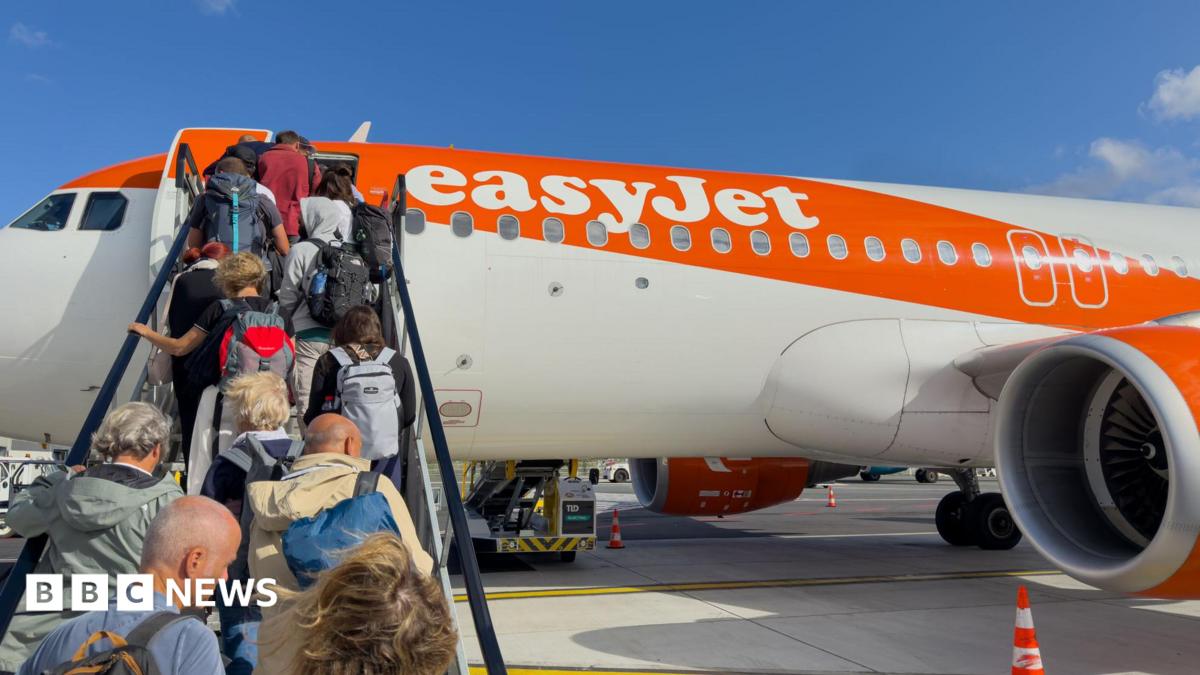
Castlelake walks away from easyJet, clearing way for Apollo Global
Castlelake has said it will not pursue a takeover of easyJet after all after a months-long takeover battle, clearing the way for US rival Apollo Global to buy the budget airline.
In early July, the US investment company agreed a £5.5bn takeover with easyJet worth £6.90 a share after making multiple proposals, but five days later Apollo offered around £5.7bn for the carrier.
In a stock exchange statement, Minneapolis-based Castlelake, which is a major aviation investor and has $38bn in assets under management, said:
double quotation mark Castlelake confirms that, following careful consideration, it does not intend to make an offer for easyJet.Castlelake is very appreciative of the constructive engagement with the easyJet Board and management team, and would like to thank them for their time and consideration of this potential transaction.
It did not say why it decided to abandon the takeover.
Key events
Raleigh bike brand faces chop after owner begins insolvency proceedings
The bicycle company that owns the historic Raleigh brand has started insolvency proceedings after failing to find a buyer.
The Netherlands-based Accell Group said on Wednesday it had called in administrators after it failed to find a viable solution to continue its operations in their current form.
Raleigh was founded in 1887 and grew to be the biggest bike manufacturer in the world. At its height it was making 1m bicycles year at its factory in Nottingham and employed more than 8,000 people.
However, after classic models such as the Chopper, Grifter and Burner children's bikes in the 1970s and 1980s, Raleigh lost market share and it stopped making bikes in England in 2002.
Britain clears Paramount’s $110bn acquisition of Warner Bros Discovery
The UK government decided not to intervene in the acquisition of Warner Bros Discovery by Paramount Skydance after receiving legally binding commitments from the US company, controlled by the Ellison family.
The $110bn tie-up between Paramount and Warner Bros Discovery, the parent company of networks like CNN and HBO, was also cleared by the UK's competition regulator on Thursday.
Paramount made various pledges in a ‘deed of undertaking,' the culture secretary Lisa Nandy said.
double quotation mark These assurances included a range of commitments on future investment in the UK, maintaining the distinct editorial identities of key services and the editorial independence of news.Following further discussions with DCMS [Department
for Culture, Media & Sport] officials, Paramount offered to strengthen those assurances and turn them into legally-binding commitments by way of a ‘deed of undertaking' made in the Secretary of State's favour.
The deal was approved by the US justice department's anti-trust division in June after months of review – despite the concerns of many people in the entertainment and media industries who believe it will hurt competition by reducing the number of film studios and – most likely – merging two news networks, Paramount's CBS News and CNN.
News of the UK's clearance of the deal came as Warner Bros Discovery reported worse-than-expected sales for the second quarter, hurt by lacklustre box-office performance and weak advertising sales due to the absence of National Basketball Association games.
Revenues came in at $8.7bn in the quarter, as studio revenue â fell 39%, with â releases including “Mortal Kombat ​II†and “Supergirl†failing to replicate the blockbuster success of last year's top grosser “A Minecraft Movie†and “Sinners“.
Warner's film slate â is weighted toward the second half of the year, when major releases such as “Digger†and “Dune: Part Three†are expected to result in a better box-office performance.
The â streaming business remained a bright spot, with revenue rising 10% as HBO Max's ​international expansion and original content like “The ‌Pitt“, “Euphoria†and “House of the ‌Dragon†helped drive subscriber growth.
The division is central to Warner Bros' tie-up with Paramount, as the combined HBO Max and Paramount+ platforms are expected to give the company greater scale to compete with streaming giants Netflix and Disney.
However, the merger remains tied up in ‌court, with California and 11 other states seeking to block it on antitrust grounds. Paramount has agreed to pause the deal ​until next June, while a federal trial is set for March.
Jim Ratcliffe’s Ineos buys €400m of European chemicals shares in bet on recovery
The billionaire Sir Jim Ratcliffe's chemicals group Ineos and shareholders have spent €400m buying up shares in listed European chemicals companies, in a bet on the industry's recovery, despite still owing creditors around £19bn, according to the Financial Times.
Underlining their view that the sector is undervalued, Ineos Quattro, one of two holding groups the privately held chemicals giant uses to issue debt, last week told investors that it had placed a €200m bet on selected chemical companies, the paper said. The chemical group's three shareholders have also made a similar investment.
Together with the €200m purchase disclosed in May of a “basket of publicly traded liquid equities related to the chemical industryâ€, Ineos and its shareholders have invested more than €400m in the sector.
They are doing this while the company is scrambling to cut costs and reduce debts, amid a prolonged downturn in the global chemicals industry. Ratcliffe, who is the UK's seventh richest person, has described this as “unsurvivable†for chemical plants in Europe owing to “rising carbon costs and weak trade defenceâ€.
The two largest companies in his empire, Ineos Group Holdings and Ineos Quattro, together had more than £18bn of borrowings at the end of last year, an increase of almost £3bn on the year before.
Diageo shares bounce on ‘Drastic Dave’s $1bn savings plan

Rob Davies
Shares in Diageo bounced after the Guinness owner's chief executive, “Drastic Dave†Lewis passed the first major test of his plan to revive the flagging fortunes of the UK-based drinks company.
Lewis, a former Tesco boss known in the City for his cost-cutting zeal, promised to deliver $1bn of savings over two years through a “significant†restructuring aimed at making the company more agile.
He said this could be achieved without eroding profits and appeared to confirm rumours that the worldwide restructuring could lead to job losses, acknowledging the “very significant impact†on Diageo colleagues.
Shares in the company rose by 10% in trading immediately following the release of Lewis's first set of results, indicating market satisfaction with the new chief executive's plans to revive Diageo's fortunes.
Later the shares traded nearly 7% higher, leading gains on the FTSE 100 index.
Diageo's share price jumped last November when Lewis's appointment was announced following a rocky period under his predecessor, Debra Crew, a former captain in US military intelligence.
But it then fell in February, after Lewis slashed Diageo's dividend and reported weak demand in the US and China.
The dividend will be maintained at its reduced level of $0.50 per share, Diageo said.
Chris Beauchamp, chief market analyst at the trading platform IG, said:
double quotation mark The slashing of the dividend is the kind of thing only incoming CEOs with a mandate to save the business are allowed to do without cratering the share price – the market was prepared for it anyway after the half year was given similar treatment to today's full-year figure.Now comes the hard part, convincing and then showing investors that the turnaround plan is going to pay off.
The company said net sales were down 2% to $19.6bn (£14.6bn) in the year to the end of June 2026, amid weak sales in North America and China.
‘Mamma mia!': Trump tariffs refund fuels 53% profit spike at Nintendo

Kalyeena Makortoff
Nintendo has reported a jump in profits, as the Japanese game maker's earnings were buoyed up by a long-awaited refund on Donald Trump's tariffs.
The company said profits surged 53.5% to ¥147.4bn (£694m) over the three months to June, substantially beating expert forecasts for ¥77.8bn.
The company said sales of its Switch 2 console, which was released last summer, “maintained strong sales momentumâ€, while popular games like Yoshi and the Mysterious Book, Star Fox, and Pokémon Pokopia “performed steadilyâ€. However, that did not make up for an overall drop in sales compared with the same period last year, with revenue dropping by 10% to Â¥517.8bn.
Instead, Nintendo said profits were aided by a refund on American tariffs, after the US supreme court ruled earlier this year that Trump's “Liberation Day†trade levies, slapped on countries across the world last year, were illegal.
The Trump administration has refunded about $100bn from the tariffs charged before the US supreme court ruling, representing 60% of the total $165bn collected. Trump has continued to pitch tariffs as a solution for the US economy, bringing back domestic production, securing better trade deals and closing the deficit in the federal budget.
Nintendo's Tokyo-listed shares were up 2.87% on Thursday following the earnings release.
Nintendo filed a lawsuit weeks after the supreme court ruling, demanding a full refund from the White House that would cover what it spent on tariffs, plus interest, in an effort to recoup its costs.
Healey urged to be bold on borrowing in first test of Burnham's growth pledge – analysis
Our economics editor Heather Stewart has done some analysis on the task faced by the new UK chancellor, John Healey.
With just 12 weeks to go until his first budget, Healey is seeking ways to ramp up public investment, without busting the Treasury's fiscal rules – and some economists are urging him to be bold.
As he settles into No 11 Downing Street, the former defence secretary's most immediate challenges concern day-to-day government spending.
These include the need to pay for Andy Burnham's VAT cut on energy bills and to fill the £5bn funding gap in the defence investment plan left by his predecessor Rachel Reeves – which helped prompt Healey's resignation earlier this year.
Healey could opt to meet these costs through tax changes – with a bank windfall levy back on the agenda, for example – or by ordering Whitehall departments to penny-pinch elsewhere.
It will help that Reeves bequeathed him significant “headroom†against the rules, £24bn at the time of her spring forecast, which is unlikely to have been completely eroded by the impact of the Iran war.
But separately from these short-term pressures, Healey's boss has made clear that he wants to see a step-change in long-term investment in infrastructure and housing, to meet his promise of growth in every postcode.
One way to fund some of that additional investment may be to exploit what Burnham called “any flexibility†in the existing fiscal rules. The chancellor told the Times there was “scope for more and more rapid investmentâ€.
Reeves, now a humble backbencher, made a historic change to the way debt is defined under those rules. It means extra borrowing doesn't count against the Treasury's target if the government uses it to acquire a financial asset. That can mean a stake in a company, or a loan, for example.
Max Jones, director and head of construction at Lloyds, was more upbeat.
double quotation mark A further improvement this month suggests confidence is rising across the sector. Businesses continue to invest and plan for growth, supported by some improvements in economic conditions. While project funding is largely in place, the scale and complexity of planned works mean that momentum is expected to build steadily over time.Demand for major infrastructure and civil engineering work remains healthy, supported by investment in areas such as regulated utilities, defence and transport. Many firms are continuing to look for opportunities to grow, leaving the sector well placed to benefit as the government's renewed focus on transport and infrastructure investment takes shape.
Brian Smith, head of cost management at the construction engineering company Aecom, was also cautious about the outlook for UK construction, saying:
double quotation mark A summer marked by settled weather would usually be an opportunity for contractors to drive growth in output. But, despite decline slowing further, firms' prospects aren't going to change materially until we see movement in the economic outlook.Many projects are still in a holding pattern and awaiting a green light from clients who remain cautious of stubbornly high inflation and interest rates. One thing that will boost confidence is speedy decision-making from the government. The Social and Affordable Housing Programme is one example that will spur builders into action, but we can't afford even a moment's delay.
Progress on nationally significant infrastructure schemes will also help to strengthen order books in the long-term and give contractors the foundation they need to invest in jobs and capacity. Heathrow is the best example of where large-scale infrastructure, with no half-measures, will supercharge the economy.
“The PMI remains dismal†despite the improvement, said Rob Wood, chief UK economist at Pantheon Macroeconomics.
double quotation mark The construction PMI remains at a dismal level despite the huge jump in July, consistent with a construction sector output falling by about 1.5% three-months-on-three-months.But at least the latest signal is much better than the -3% three-month-on-three-month contraction implied by the June survey. In any case, the PMI has been far too downbeat for an extended period now, so we take the depressing mood music with a pinch of salt. Miserable sentiment suggests construction output is hardly likely to rise quickly, but we suspect sharp further falls are not on the cards either.
The PMI was boosted by an inevitable rebound in the civil engineering sector, whose output growth had apparently—according to the PMI—dropped almost as far as in the first month of the first Covid lockdown, which seems a little hard to believe. The Civil Engineering output balance hit 22 in June, compared to a low of 14 during Covid, but rebounded to 38.3 in July. The housing activity balance jumped by nearly 6 points to 41.8, and the least bad since October, while commercial activity output falls were the least marked since January.
For what they are worth, the forward-looking balances point to further improvement ahead, with new orders falling by the least since September, while the employment and future activity expectations were the strongest since February. Meanwhile, input price inflation eased to the least marked since February, but the price balance of 69.7 remains miles above its 2025 average of 59.7. Sub-contractor charges also continue to rise faster than in 2025, despite increases easing fractionally on the month.
UK construction sector ‘stabilises’ as optimism rises
The downturn in UK construction has also eased, and optimism among firms improved – more good news for Andy Burnham's government, after the service sector's return to growth in July.
The headline index from S&P Global's monthly survey jumped to 44.7 in July, up from 34.4 in June, but still below the 50 mark that divides contraction from growth.
New business received by construction companies fell at the slowest pace for 10 months in July. Some firms talked of a recent turnaround in tender opportunities, including for commercial development, residential projects and transport infrastructure work, and confidence levels are now the highest since February.
However, many also said that heightened geopolitical uncertainty and sluggish domestic economic conditions continued to weigh on customer demand.
The rate of job losses was the slowest since February.
Much slower rates of contraction were seen in all three main sub-sectors in July. Commercial work (index at 46.8) showed the greatest resilience, while civil engineering activity again saw the steepest pace of decline, at 38.3. Meanwhile, house building activity fell at the slowest pace since October, with the index at 41.8.
Tim Moore, economics director at S&P Global Market Intelligence, said:
double quotation mark July data suggests that the performance of UK construction sector has started to stabilise after a sharp downturn throughout the second quarter of 2026. Business activity levels continued to decline in all three main categories, but in each case the rate of contraction was much slower than in June. This was supported by the weakest reduction in new business intakes since September 2025.A renewed improvement in supplier performance and softer input cost inflation were also positive developments in July. Construction companies widely commented on fuel surcharges and higher raw material prices due to the war in the Middle East, but the overall rate of cost inflation was the lowest for five months.
Eurozone construction downturn eases despite worsening new orders
After the good news from Germany's manufacturing base, the downturn in the eurozone's construction sector eased in July.
It is a mixed bag, though.
The latest PMI survey from S&P Global, a closely-watched monthly snapshot of the sector, shows the rate of decline was the slowest for four months, although there was a steeper deterioration in new order intakes, and firms were slightly more pessimist about the coming year.
The headline index rose from 42.8 in June to 44.3 in July.
The rapid inflation in material and other costs following the start of the Iran war on 28 February continued to ease, with cost burdens rising at the slowest rate since before the conflict.
The commercial sector recorded the largest overall drop in activity, followed closely by housebuilding. Civil engineering activity fell slightly, and at the weakest rate over the last six months.
The three largest eurozone economies all recorded declines in construction output during July. France posted the biggest decline, although it was the softest in five months. Italian firms registered only a marginal contraction, while Germany bucked the easing trend to register the steepest fall in output in three months.
Usamah Bhatti, economist at S&P Global Market Intelligence, said:
double quotation mark The construction sector in the eurozone remained in solid contraction territory at the start of the third quarter, with all three monitored sectors continuing the declines seen a month prior. The downturn was also broad-based by nation, as Germany posted a steeper reduction in activity.July data saw a further softening in cost pressures, however, as the surge in inflation from rapidly rising energy prices following the war in the Middle East eased further since April's recent record.
This did little to dent pessimism in the year-ahead outlook among the bloc's construction companies, however. The degree of negative sentiment intensified from a month prior, to reach the most pronounced for three months.
Wizz Air swings to loss on soaring fuel costs
Meanwhile, Wizz Air has swung to a quarterly loss after the Iran war sent fuel costs spiralling.
The Hungarian low-cost airline warned that the industry is set to face challenges for the rest of the year. Its shares fell 4.8% on the FTSE 250 in London.
It posted an operating loss of €183m (£157m) between April and June, compared with a profit of €27.5m a year earlier, despite passenger numbers soaring by 25% to 21.2 million. Revenues increased 5.5% year-on-year to €1.5bn.
Wizz Air blamed a jump in jet fuel costs linked to the surge in global oil prices following the US-Israeli attacks on Tehran in late February, which turned into a protracted war.
Brent crude peaked above $120 a barrel in late April but has since fallen back as negotiators from the US and Iran, helped by mediators, are trying to hammer out a peace deal. Today, Brent is up 0.6% at $79.9 a barrel.
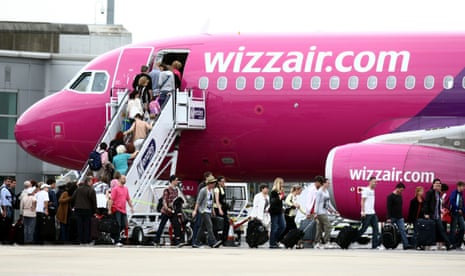
The airline's fuel bill rose by 39% compared with last year, to €610.5m, which it said reflected 87% higher market prices, partly mitigated by fuel hedges, currency move and cost cutting.
Other airlines – easyJet, British Airways owner IAG and Ryanair – have also been hit, reporting declines in profits in recent weeks.
Wizz Air had previously said it took a €50m hit from the Iran war after having to cancel flights to Tel Aviv in Israel and other routes to the Middle East and Cyprus in March.
While many flights have resumed, the company said it was pivoting from longer-haul Middle East destinations to shorter European routes, such as Spain, Italy, Croatia and Albania. It also said its exposure to the Middle East region was limited and mostly focused on Israel.
Its chief executive, József Váradi, said:
double quotation mark The industry has been extremely volatile over the June quarter due to conflict in the Middle East, elevated fuel prices, and changes in booking patterns.We are focused on strengthening the core network, improving density and reallocating flying from longer-haul Middle Eastern operations into shorter European sectors.
While we continue to see the build-up of forward bookings, the rest of the year is expected to present both industry challenges and strategic opportunities.
WPP shares surge as it says turnaround plan is on track
WPP shares have surged as much as 27%, after the advertising company said it was on track with its cost-cutting programme and a drop in quarterly sales was not as bad as feared.
The shares are the biggest riser on the FTSE 250, and are now trading 24.5% higher at 382.5p – on track for their biggest daily jump since 1992.
WPP, which develops advertising campaigns through its global network of agencies such as Ogilvy, VML and AKQA, posted a 2.8% decline in like-for-like sales in the second quarter driven by client losses last year. It flagged an improving quarterly trend in spending from existing customers and a smaller drag from net new business.
Cindy Rose, the chief executive who took the helm last summer, said the company was “firmly on track†with the first phase of its plan “to stabilise the business†which aims to deliver annual cost savings of £100m.
In February, WPP set out a radical restructure to counter the threat posed by the growth of artificial intelligence, including plans to sell assets and job cuts. Aiming to be “a simpler, lower-cost, AI-enabled businessâ€, the London-based company hopes to achieve £500m of annual savings by 2028, at a cost of £400m over two years.
The group is targeting a return to organic growth next year.
double quotation mark Organic growth remains our North Star. While the turnaround of our financial performance will take time to fully flow through, our strong new business wins and improved client retention, as well as progress on cost savings and portfolio actions, demonstrate that we are building a simpler, more competitive and higher-performing WPP.
Analysts at Citi said:
double quotation mark We think consensus 2026 organic growth ‌could prove overly conservative following the first-half ​results. Additionally, the progress on disposals is positive and indicative of â the potential unseen value ​in the ​broader portfolio.
European shares have opened higher.
The FTSE 100 index in London has risen some 19 points to 10,908, a 0.2% gain, getting closer to the 11,000 level.
Persimmon is among the main risers, up 2.5%, after the UK housebuilder lifted its outlook for this year as hopes to benefit from Andy Burnham's housing programme – shrugging off rising construction costs linked to disruption from the Iran war.
The Dax in Frankfurt edged up 0.15% while the CAC 40 in Paris climbed 0.7%, the FTSE MiB in Milan rose nearly 0.8% and the Ibex in Spain added more than 1%.
Persimmon ups outlook as it bets on Burnham’s housing programme despite higher costs
Kalyeena Makortoff
UK housebuilder Persimmon has lifted its outlook, saying it is “well-placed†to benefit from prime minister Andy Burnham's policy agenda, despite growing costs linked to the Iran war.
The FTSE 100 builder told investors this morning that pre-tax profits were up 15% for the first six months of the year to £168m, following a 13% rise in the number of homes built over the period.
That was despite “challenging†market conditions, following a rise in building costs, and many consumers still struggling to afford homes.
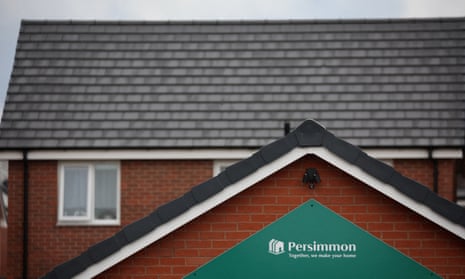
Bosses added that cost pressures were likely to grow in the months ahead. “We expect additional inflationary pressure in 2027 including as a result of the conflict in the Middle East,†Persimmon said in a market update, warning that even its own
It warned that its cost cutting measures might not be enough to fully offset the impact of inflation.
But Persimmon said it was lifting its outlook for the full-year, with plans to complete 12,500 new homes by the end of the year, at the top end of its previous guidance.
The housebuilder is hoping to benefit from Burnham's policy programme, including plans to boost housing and slash costs for cash-strapped consumers.
double quotation mark Persimmon remains well-placed to drive further growth through our unique set of capabilities. The UK housing market continues to experience both a long-term undersupply of housing and affordability challenges for new homeowners, which is a key focus for the new government.As the most cost-efficient national housebuilder, with a clear focus on customer value and affordability, a growing land pipeline and expanding outlet network, we are well placed to respond.
Investec's housing analyst Aynsley Lammin said:
double quotation mark Clearly markets remain challenging but Persimmon continues to be on the front foot and is delivering relatively well.
Introduction: German factory orders rise faster than expected; Asian shares fall on tech pullback
Good morning, and welcome to our rolling coverage of business, the financial markets and the world economy.
In Germany, factory orders rose more than expected in June as Europe's biggest economy shrugged off disruption from the Iran war.
At the same time, Rheinmetall, the country's biggest defence company, slashed its outlook after losing a big government contract.
New manufacturing orders increased by 3.1% from the previous month, according to Germany's statistics office, comfortably beating analysts' expectations of an 0.3% increase. However, stripping out large orders, new orders dipped 0.5%.
Over the three months to June, new orders rose 1.3% from the previous three months.
Machinery and equipment led the way with 12.7% growth along with computer, electronic and optical products, up 22.7%. There were big orders in both sectors. The car industry reported a 3.8% rise.
In contrast, orders plunged 41.7% for aircraft, ships, trains and military vehicle equipment, with only partial data in this sector available at the moment.
Foreign orders were up 0.2% in June, with orders from the euro area falling by 14% and orders from outside the eurozone rising by 10.2%. Domestic orders rose by 7.8%.
Meanwhile Rheinmetall cut its sales forecast for this year after losing a big German naval contract worth several billion euros.
Rheinmetall now says annual revenues could be as low as €13.7bn rather than the previously forecast €14bn at the low end of its targeted range. The arms maker stuck to its operating margin forecast.
This comes after Germany cancelled the F126 frigate programme in June, which Rheinmetall said could reduce its revenues by up to €300m.
Asian shares retreated on Thursday after the previous day's tech rally, as investors turned cautious again, following in Wall Street's footsteps where Elon Musk-run SpaceX plunged 13.6% and chipmaker AMD tumbled 7%.
Both delivered strong quarterly results but investors freaked out about SpaceX's ballooning AI spending while AMD was hit by Musk saying SpaceX planned to buy its AI chips from rival Nvidia. While SpaceX's quarterly revenue nearly doubled year-on-year to $7.8bn, capital spending jumped to $18.3bn – more than six times last year's level – with most of it going towards AI.
Japan's Nikkei fell 0.9% while Hong Kong's Hang Seng dropped 1.9% and South Korea's Kospi lost 4.6% and China's CSI 300 index dipped 0.3%.
Brent crude is holding below $80 a barrel, dipping 21 cents, or 0.3%, to $79.22 a barrel.
The Agenda
-
8.30am BST: Eurozone construction PMI for July
-
9.30am BST: UK construction PMI for July
-
1.30pm BST: US Initial jobless claim for week to 1 August