Live Reporting
Edited by Joel Guinto, with Katy Watson and Simon Atkinson in Sydney
-
End of first day of mushroom killer’s appeal hearingpublished at 09:27 BST
The first day of Erin Patterson’s appeal hearing has ended. Here’s what you need to know:
- Patterson was sentenced to life in prison last year for murdering several relatives with deadly mushrooms concealed in a beef Wellington lunch
- Her lawyers are appealing her sentence, arguing that there was a “substantial miscarriage of justice” at her trial
- The jury accidentally stayed at the same hotel as prosecutors and a key police witness – which Patterson’s lawyers today said was “catastrophic” to the integrity of the trial. But prosecutors pushed back against this claim, saying there was no evidence of interaction between the jurors and those guests
- Here’s a summary of the key arguments made today, and how they went down with the appeals court judges
- Patterson attended the hearing via video link from a maximum security prison
- Also in court was Ian Wilkinson, the sole survivor of the fateful mushroom lunch
- The prosecution is mounting its own appeal, arguing that Patterson should not be eligible for parole. Her current sentence allows for parole after 33 years
We’re wrapping up our live coverage now, but you can read our news story for more on the hearing today.
-
A panel of three judges will decide this casepublished at 09:24 BST
Justice Stephen McLeish, Justice Lesley Taylor and Justice Peter Kidd are the judges hearing this case in Melbourne.
As appeal court judges, they had no involvement with the trial in Morwell last year.
It’ll be up to them to decide whether or not the appeals by both Erin Patterson and the public prosecutor are successful.
If they do not all agree on the decision, the case will be decided by a majority vote (two to one). And so the opinion of the two agreeing judges becomes the final order of the court.
-
Watch: Police question Erin Patterson after about fatal lunchpublished at 09:23 BST
We haven’t heard from Erin Patterson during this hearing – and we won’t.
But she gave evidence at her trial, and footage of her police interview in the days after the fatal lunch has also been made public.
Media caption, Erin Patterson: Police interview with Australian mushroom murderer
-
What happens if Patterson wins – or loses?published at 09:02 BST
 Simon Atkinson
Australia producerWe expect the three appeal court judges will not make a decision immediately.
This is called a reserved decision and can take many weeks.
If Patterson's appeal is successful, her convictions and sentence would be overturned, and she'd likely face a retrial. She could also apply for bail.
That is what happened last year in Victoria, in the case of Greg Lynn, a pilot who had his conviction for the murder of an elderly camper overturned on appeal.
Far more appeals fail than succeed. The threshold for the appeal court to throw out a jury's decision is high, even if appeal judges conclude the prosecution was not perfect.
If Patterson loses, she could apply for “special leave to appeal†to Australia's High Court – though that is rarely granted – and would have 28 days to do that.
-
The never-ending interest in the mushroom murderspublished at 08:49 BST
 Katy Watson
Australia correspondentWithout doubt, this is the story I am most asked about in all my years of reporting.
Family, friends and colleagues are keen to know what it was like in court, how Erin Patterson seemed as she gave evidence – but most of all, why would she have done it?
Her motive was always in question – in fact, the prosecution argued right from the start that a motive wasn't necessary to prove she was guilty of murder. But the mystery over her reasons for killing three relatives is partly why this trial drew so much attention.
An average family, having an average family lunch that ended in such tragedy.
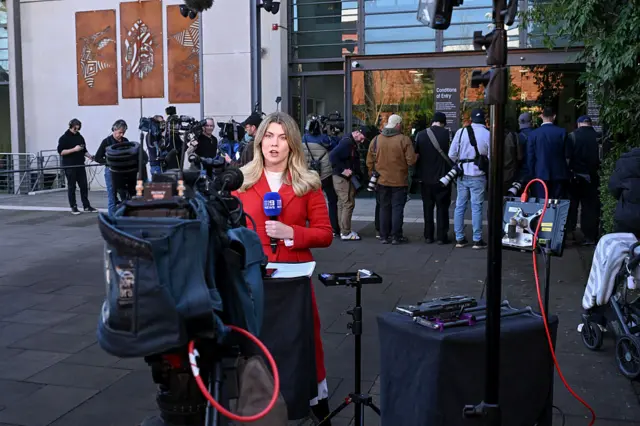 Image source, Getty Images
 -
In pictures: Who was in court today?published at 08:40 BST
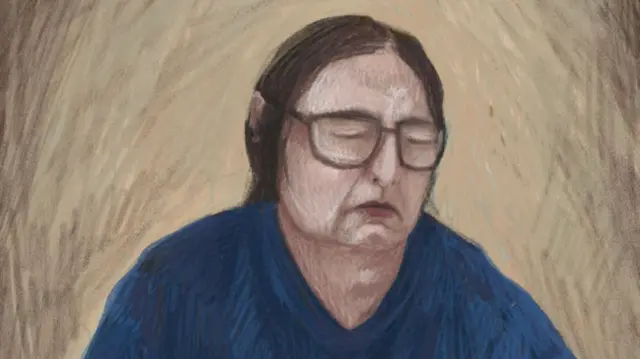 Image source, Reuters
Image caption, Erin Patterson attended the hearing via video link from the Dame Phyllis Frost Centre, a maximum security prison
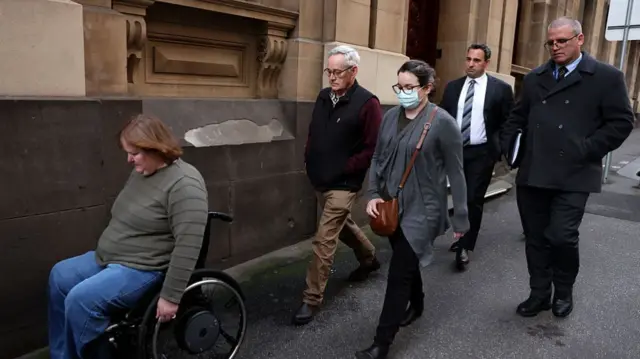 Image source, AFP via Getty Images
Image caption, Ian Wilkinson (second from the left), the sole survivor of the mushroom lunch in 2023, was at the hearing today with his family and police
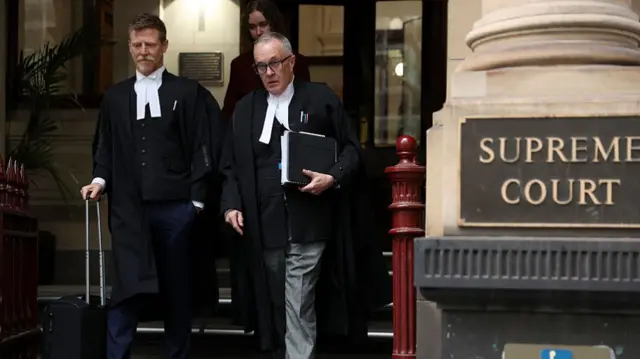 Image source, AFP via Getty Images
Image caption, Crown prosecutors Jeremy McWilliams (left) and Brendan Kissane leaving the court after the hearing
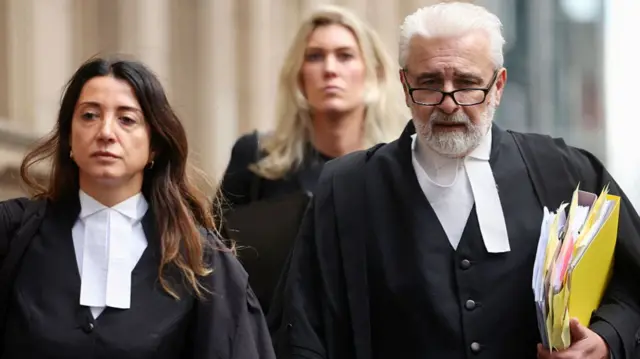 Image source, AFP via Getty Images
Image caption, Veronika Drago (left) and Richard Edney argued their case in court today as Erin Patterson’s lawyers
-
Trial-famous lawyers not appearing in this hearingpublished at 08:35 BST
Simon Atkinson
Australia producer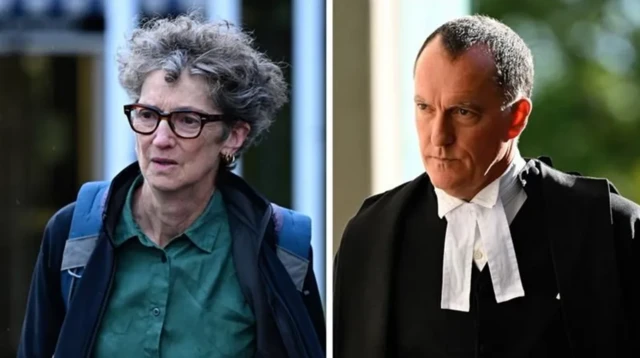 Image source, EPA
Image caption, Dr Nanette Rogers and Colin Mandy SC became familiar faces to many during the trial
After sitting through the many weeks of Erin's Patterson's trial, the barristers grew familiar to us – and not just in the courthouse.
In the small town of Morwell, you'd spot them in the local cafes and restaurants too, and as they walked in and out of court steadfastly ignoring the barrage of cameras.
But in this appeal, different figures are representing the two sides.
Patterson is using the same law firm, but they have appointed Richard Edney and Veronika Drago to lead her case. Her barrister from the trial, Colin Mandy, is not involved here.
And while it was Dr Nanette Rodgers lead the prosecution last year, today Victoria's Director of Public Prosecutions Brendan Kissane KC and prosecutor Jeremy McWilliams are appearing for the crown.
-
Who were the victims?published at 08:27 BST
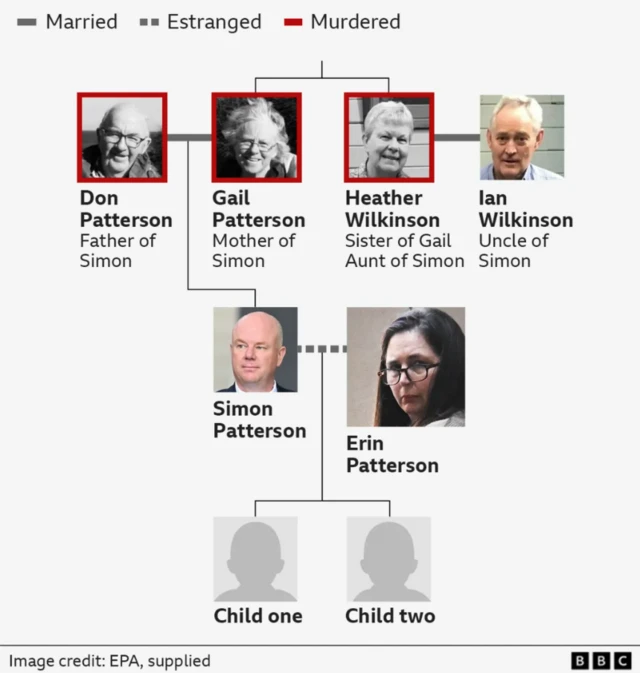
The three people who died in hospital in the days after Patterson's lunch were Patterson’s in-laws, Don and Gail Patterson, both 70, and Gail’s sister Heather Wilkinson, 66.
Heather’s husband, local pastor Ian Wilkinson, recovered after weeks in an induced coma and still has ongoing health issues related to the poisoning.
Simon Patterson, Erin’s estranged husband with whom she has two children, had been invited to the lunch too, but pulled out the day before.
-
Mushroom lunch survivor Ian Wilkinson hasn’t missed a day of courtpublished at 08:18 BST
Katy Watson
Australia correspondent Image source, AFP via Getty Images
Every day during the nearly three-month trial last year, pastor Ian Wilkinson turned up to listen to the evidence.
The only survivor of the 2023 lunch which killed his wife and friends, he would say nothing as he walked in and out of court, usually flanked by family members, but his presence was predictable.
Also predictable was his outfit. Day in, day out, he donned a black sleeveless vest with a silver ichthys (or Jesus fish brooch) – a public show of his religious beliefs.
In that way, today felt like a continuation of the trial. Wilkinson was back in court to witness the latest episode of this case, once again wearing his trusty vest and brooch.
-
What happened today: A summarypublished at 08:03 BST
Koh Ewe
Live page reporterHere a quick look at the arguments made today and how they went down.
A reminder, the judges haven’t ruled on anything, and likely won’t for some weeks. Their strong questioning on some of these points isn’t necessarily and indication of how they’ll decide.
On the jury’s accommodation mishap
- Patterson’s lawyers said: The jurors were supposed to be isolated, but ended up staying in the same hotel with prosecutors and a key police witness – a “fundamental irregularity” which was “catastrophic” for the trial
- The appeals court judges said: “So what?” Is there proof this resulted in improper communication between the jurors and the others?
- Prosecutors said: Evidence shows there was “no interaction between any other person and the jury” and the system to prevent this worked as it should
On mobile phone tower data which suggested Patterson had visited locations of death cap sightings
- Patterson’s lawyers: Those pieces of evidence were “ripe for misuse” and should not have been allowed. The cell tower data only “possibly” showed where she had been, and there was “no evidence” Patterson had seen the posts detailing the locations of the deadly fungi
- Prosecutors: The evidence, when considered together, is relevant and strong, and the expert discussing the mobile phone data had also warned the jury of “appropriate limitations” in his methods
Patterson’s mushroom foraging photos dating back to 2020, which were ruled inadmissible by the court
- Patterson’s lawyers: The evidence should have been allowed, as it showed her long-standing interest in foraging, and it unfairly forced her to take to the witness stand
- Judges: Despite the photos being absent from the trial, Patterson was still able to testify about her hobby at the stand
The question of motive and Patterson’s Facebook friends
- Patterson’s lawyers: The prosecution had opened the case stating it wouldn’t rely on evidence of a motive to kill, but made a “surreptitious” change by the end to hint at a motive – using messages Patterson sent to her Facebook friends in which she vented about her in-laws
- Judges: The Facebook messages appear to have been used by the prosecution as a “shield, not a sword” – to cast doubt on Patterson’s claim that she had an excellent relationship with her in-laws
-
Watch: Why is Australia’s mushroom killer back in court?published at 07:49 BST
In this short video explainer, BBC’s Australia correspondent Katy Watson explains why Erin Patterson has been back in court today.
Media caption, Why is Australia’s mushroom murderer back in the headlines?
-
Nine weeks of evidence that gripped a courtroompublished at 07:35 BST
 Tiffanie Turnbull
BBC News, SydneyIf you’re just joining us and need a recap of all the twists and turns of last year’s trial, you can read this story.
Over nine weeks, the jury heard evidence suggesting Erin Patterson had foraged death cap mushrooms sighted in nearby towns and lured her victims to the fatal meal under the false pretence that she had cancer – before trying to conceal her crimes by lying to police and disposing of evidence.
Some key bits of evidence included:
- The orange plate: Survivor Ian Wilkinson recounted watching food go onto four grey plates – and an orange one for Erin. “I’ve puzzled about it since lunch,” his wife had said, according to a witness. “Is Erin short of crockery?”
- An orange cake: Detailing the lunch publicly for the first time from the witness stand, Erin offered an explanation: a secret struggle with bulimia. She said she had been regularly binge-eating and purging since her teens – something her defence team suggested accounted for her lack of symptoms
- Red flags: As her victims suffered in hospital, Erin was covering her tracks, prosecutors alleged. The day after she was discharged from hospital, CCTV captured Erin travelling to a local dump and disposing of a food dehydrator later found to contain traces of poisonous mushrooms. She was also using three phones around the time of the lunch, two of which disappeared shortly afterwards. The one she did hand over to police had been repeatedly wiped.
-
Court adjourns for the daypublished at 07:29 BST
We have come to the end of today’s arguments, and court has been adjourned for the day – but stay tuned, we’ll be summarising all we heard.
Prosecutors will be back up tomorrow, continuing their rebuttal of the arguments made by Patterson’s lawyers.
Then they’ll move onto their own appeal. They want the appeal judges to overturn the triple-murderer’s parole period, arguing that she should never be freed.
-
How Patterson sourced death cap mushrooms ‘unknown’ and ‘unknowable’published at 07:25 BST
Koh Ewe
Live page reporterMcWilliams goes on to say that the danger of unfair prejudice in this case is “next to negligible”, due to the amount of assistance the jury was given to understand all the evidence put before them.
The defence argued that the cell tower data isn’t very precise, and Patterson could have been kilometres away.
But the expert on cell tower data had repeatedly acknowledged the “appropriate limitations” in his methods, which were carried out in a scientific way, McWilliams argues.
The expert had acknowledged that the “best that can be said” with the available data was to tag the phone in a “general areaâ€, he says.
Ultimately, McWilliams says the prosecution was just suggesting this was an opportunity for Patterson to get her hands on death cap mushrooms – not that this was exactly when and how she did.
“How she sourced them is unknown and unknowable,” he says.
-
Cell tower evidence not ‘purely speculative’published at 07:15 BST
Crown prosecutor Jeremy McWilliams is now addressing the arguments by the defence that mobile phone tower data and online posts showing nearby locations with death cap mushroom were irrelevant and should have been excluded.
You can find a recap of exactly what that evidence is here.
McWilliams says the defence wants the appeal judges to look at these bits of evidence in a piecemeal way, but when considered together they’re relevant – and strong.
Visits to two towns where death caps were spotted, indicated by the cell tower data, were “genuine outliers” when looking at Patterson’s mobile phone records more broadly.
And her previous use of the iNaturalist citizen scientist database meant it was realistically possible she’d seen the posts pointing to the locations of the deadly fungi.
It was not “purely speculative”, as the defence contended, and this type of scientific evidence is often used in trials, McWilliams said.
-
Jury mishap in part due to ‘the nature of Morwell’published at 07:01 BST
Simon Atkinson
Australia producerThe jury ending up in a hotel with other members of the case certainly is unusual – and in the words of the defence, a “catastrophic” accident.
But the public prosecutor has explained it away as “one of those things that happened because of the nature of Morwellâ€.
Having spent weeks there during the trial I can see what he means.
Each week the small town in Victoria, a couple of hours south west of Melbourne, was inundated with lawyers, police and especially media.
Finding places to stay was hard, especially as the trial dragged on and stays became longer than anyone anticipated.
And it was not helped by a big table tennis tournament taking place nearby – meaning most accommodation was chock-a-block, even in nearby locations.
My small team had to move from hotel to motel, and occasionally to a completely different town.
So finding somewhere for a jury of 12, plus their jury keepers, to stay on a moving timetable was very likely a logistical nightmare.
-
Appeal over jury accommodation mix-up ‘fails at the outset’, prosecutor sayspublished at 06:31 BST
Addressing the mistake which saw the jury housed in the same accommodation as some prosecutors and a key witness, the Director of Public Prosecutions Brendan Kissane KC says the situation actually shows “the system worked as it was intended to work”.
The jury was constantly supervised, and when a potential problem was identified, steps were immediately taken to prevent it becoming an actual issue.
“The evidence in this case is that there was no interaction between any other person and the jury,” he says.
The defence argued that the jury could have been subconsciously influenced by even seeing these people but Kissane had little time for that argument.
“The idea that contact includes looking out a window and seeing someone passing by, in our submission, doesn’t work,” he says.
And other cases which the defence pointed to in which jury errors resulted in retrials all had evidence of improper contact, he says, adding: “That’s not the situation here.”
This appeal ground fails at the outset, he says.
-
The defence team wraps uppublished at 06:24 BST
Simon Atkinson
Australia producerAfter about four hours on their feet, Erin's Patterson's lawyers have finished running through their grounds of appeal.
They were questioned quite robustly over some of their arguments, with the judges clearly needing some convincing.
Now it is the turn of the Crown to essentially rebut the points that have been made on behalf of Patterson.
The Director of Public Prosecutions Brendan Kissane KC is up first – and is taking on the argument about the supposedly “catastrophic†jury bungle.
-
Facebook message evidence a ‘shield, not a sword’ for prosecution – judgepublished at 06:21 BST
Koh Ewe
Live page reporterOne of the judges is challenging Edney’s argument about the Facebook messages, saying that “in the hands of the prosecution this evidence could only be used as a shield, not a sword”.
That is, the prosecution had relied on the evidence to cast doubt on Patterson’s claim that she loved her in-laws and had a great relationship with them, free of conflict.
The judges also noted earlier that prosecutor Nanette Rogers had “made clear what the correct question was” by reminding the jury, before the evidence was presented, that the key issue was not why Patterson killed her relatives, but whether there it had been proven beyond reasonable doubt that she did so deliberately.
-
Patterson says ‘Facebook friends' shouldn't have formed part of trialpublished at 06:10 BST
Katy Watson
Australia correspondentDuring the trial, Patterson was depicted as a bit of a loner.
Her friendships were formed through online true crime groups and some of her so-called “Facebook friends†gave evidence in court. The jury was also shown messages between Patterson and those friends.
In several expletive-laden exchanges, she vented about her in-laws and said she wanted “nothing to do†with them.
At one point, she also called her estranged husband Simon Patterson a “deadbeatâ€.
In the appeal application, Erin Patterson said the evidence wasn't relevant and was more prejudicial than it was useful.
Her lawyers are now explaining why they believe this information caused a miscarriage of justice.