Lebanese president: ‘I will not meet with Netanyahu before the war ends’
In statement to CNN, Lebanese President Joseph Aoun said:
double quotation mark I will not meet with Netanyahu before an agreement is reached to end the war. We say to the Israeli government that a military solution will never provide security for northern Israel.We have no option but to negotiate and we are trying to take advantage of President Trump's personal interest in ending this conflict. What is being proposed is a non-aggression agreement or a security agreement, but as for a peace agreement, we are part of the Arab Initiative.
Key events
Closing summary
-
Israel and Iran said they have halted attacks on each other on Monday following a fresh wave of attacks from Iran on Israel in response to Israeli attacks on southern Beirut, as well as Israeli strikes on central and western Iran. The aggression, which began Sunday, marked the most direct confrontation between Iran and Israel since an April ceasefire.
-
Benjamin Netanyahu, Israel's prime minister, acknowledged the halt in fighting with Iran in a televised speech, but vowed to respond “with force†to future attacks.
-
The pause in strikes came after US president Donald Trump told Iran and Israel to stop “shootingâ€. Axios reported that on Monday Netanyahu called off what was set to be the biggest attack on Iran since April after a conversation with Trump. Trump told Axios that he had warned Netanyahu: “I said, ‘Bibi, you better be careful, or you will be on your own very soon,'†Trump said.
-
Within hours of this declared halt in hostilities, however, the IDF said its air defences intercepted a suspicious aerial target heading toward the area of Eilat in southern Israel. It had been coming from Yemen, the IDF said – where Houthi forces, close allies of Iran, are located.
-
Lebanese President Joseph Aoun told CNN that that he will not meet with Netanyahu before an agreement is reached to end the war. “We say to the Israeli government that a military solution will never provide security for northern Israel,†Aoun said.
-
Mohammad Bagher Ghalibaf, Iran's parliamentary speaker and chief negotiator said: “We are not going to either just fight or just negotiate; rather, we are going to â fight at our â own time and negotiate at our own time. Our goal is the â end of â the war and stable security and we have no trust towards ‌the opposing party.â€
-
Lebanon's defence minister has said that Israel has carried out nearly 3,500 airstrikes on Lebanon and hundreds of controlled explosions since the US announced a ceasefire for the country in mid April.
-
The Israeli defense ministry's coordinator of government activities in the territories (COGAT) said that it will reopen the Kerem Shalom crossing back into Gaza to “gradually†allow in aid from Tuesday. It closed all crossings into Gaza and halted aid on Sunday as a response to Iran's attacks. This move was criticised by humanitarian charities.
The IDF said its air defences have intercepted a suspicious aerial target heading toward the area of Eilat in southern Israel. It had been coming from Yemen, the IDF said – where Houthi forces, close allies of Iran, are located.
Donald Trump on Monday posted on Truth Social that both Israel and Iran were “looking to do an immediate ceasefire†and that “final negotiations on peace†were under way. He told Axios that he had warned Netanyahu that “you will be on your own very soonâ€.
Netanyahu said on Monday that he has halted strikes on Iran because “after we struck the terror regime in Tehran, it stopped attacking usâ€. However, he said Israel would respond “with force†to any future attacks.
Report: Trump warned Netanyahu that he may lose US support
Donald Trump told Axios that he had stopped Israeli prime minister Benjamin Netanyahu from launching any more strikes on Iran on Monday by warning him that if he continued the aggression, he would lose the US as a partner in the war on Iran.
“I said, ‘Bibi, you better be careful, or you will be on your own very soon,'†Trump told Axios.
This conversation purportedly took place after Israel launched airstrikes on Beirut on Sunday and Iran responded by striking Israel. After the exchange of several more rounds of strikes, Israel was preparing for its biggest attack on Iran since April, Axios reports, citing two anonymous Israel officials – but then came Trump and his warning to Netanyahu.
Trump told Axios that he received calls from five different countries in the region asking him to get Netanyahu to stop. Tehran had also called Trump, Trump said, and told him that “they are not doing any more attacks and asked us to tell Israel not to do any more attacksâ€.
Lebanon’s directorate general of antiquities calls for protection of Tyre archaelogical site
Israeli strikes on Tyre in southern Lebanon have damaged a world cultural heritage site, an act that the ministry of culture's directorate general of antiquities said on Monday constitutes a violation of international law and regulations around the protection cultural heritage.
Strikes that began on Sunday hit the site entrance and some administrative buildings, causing direct damage to some archaeological elements there, the diectorate general of antiquities said on social media.
Tyre is an ancient Phoenician city believed to be the birth place of purple dye, according to the United Nations Educational, Scientific and Cultural Organisation (UNESCO). Its archaelogical site includes Roman baths, an arena, the Roman colonnaded road as well as a cathedral built in 1127 by the Venetians, in addition to the remains of a necropolis.
Complex relationship between Trump and Netanyahu continues to undermine Middle East ceasefire

Julian Borger
The latest eruption of hostilities between Iran and Israel appears to have been contained for now after Donald Trump insisted he called “all the shots†in the Middle East, but in a dangerously fragile region Benjamin Netanyahu has again shown he is ready to take shots of his own.
The exchange of missiles on Sunday and Monday was ample demonstration of the inherent instability of the current limbo between war and peace, but it also shone a bright light on the complex and conflicted relationship between the US president and the Israeli prime minister, frenemies who could determine the fate of the current ceasefire.
More here:
In a series of posts Mohammad Bagher Ghalibaf, Iran's parliamentary speaker and chief negotiator said: “We are not going to either just fight or just negotiate; rather, we are going to â fight at our â own time and negotiate at our own time. Our goal is the â end of â the war and stable security and we have no trust towards ‌the opposing party.
“The Lebanon affair demonstrated that the diplomatic arena, alongside the military arena, can push back enemies. One time we prevent the attack on Beirut by threatening to cut off negotiations, and another time by attacking. We will turn the maritime blockade into another failure for the enemy,†he ended.
According to Mohammad Bagher Ghalibaf, Iran's parliamentary speaker and chief negotiator,The US is “neither seeking a ceasefire nor seeking dialogue†and Iran should respond “decisively to defend the rights of the Iranian people.â€
“We do not want to move forward with commitment or sloganeering, but rather we must seek an engineered victory with Iranian authority and rationality,†he said.
“The military field, the diplomatic field, the field of public presence, and the field of serving the people are the threads and fibers of a single fabric. If we consider diplomacy to be merely dialogue in closed rooms and diplomatic smiles, we will fail from the very beginning,†Ghalibaf added.
Lebanese president: ‘I will not meet with Netanyahu before the war ends’
In statement to CNN, Lebanese President Joseph Aoun said:
double quotation mark I will not meet with Netanyahu before an agreement is reached to end the war. We say to the Israeli government that a military solution will never provide security for northern Israel.We have no option but to negotiate and we are trying to take advantage of President Trump's personal interest in ending this conflict. What is being proposed is a non-aggression agreement or a security agreement, but as for a peace agreement, we are part of the Arab Initiative.
Israel and Iran trade strikes: what does this mean for peace deal?
Nosheen Iqbal with the Guardian's Today in Focus podcast speaks to the Guardian's senior international correspondent Julian Borger about what we can expect next with the peace talks between Iran and Israel.
Here are some of the latest images coming out of the Middle East:
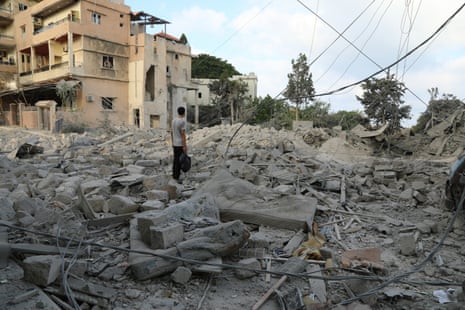

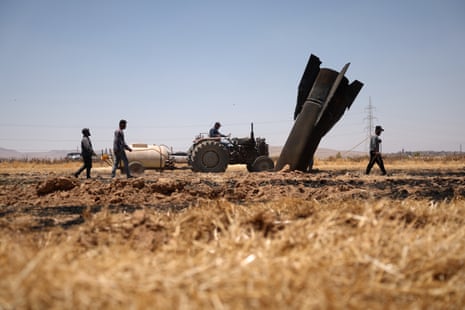
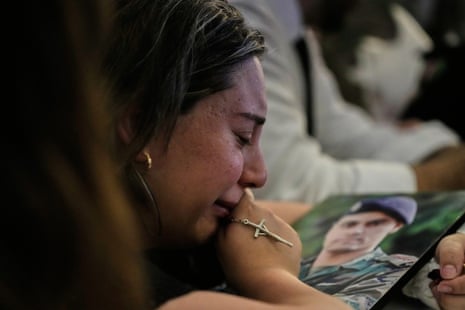
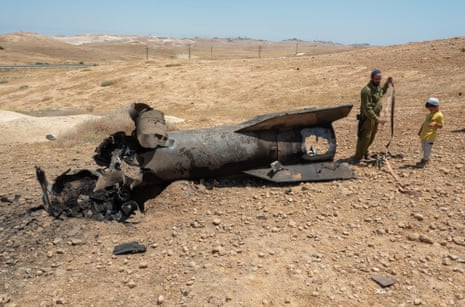
Four paramedics wounded in Tyre, says Lebanese Red Cross
Four paramedics were hit with glass shrapnel is an attack in front of the Lebanese Red Cross Centre in Tyre, the Lebanese Red Cross said on X.
The injuries ranged from moderate to minor, according to the Lebanese Red Cross.
The IDF did not immediately return a request to confirm any activity in the area, but had earlier issued a warning urging residents to evacuate the Zuqaq al-Mufdi neighbourhood located north of the centre.
Summary of the day so far
It is approaching 8pm in Tel Aviv and Beirut, and 9pm in Tehran. Here is a summary of the key events so far today:
-
Israeli prime minister Benjamin Netanyahu said on Monday that he has halted strikes on Iran after similar remarks earlier from Iranian leadership.
-
The pause in strikes came after US president Donald Trump told Iran and Israel to stop “shooting†after the two sides attacked each other's territory for the first time since a fragile ceasefire took effect in April.
-
Iran launched waves of attacks on Israel on Monday in response to Israeli attacks on southern Beirut, while Israel launched strikes on central and western Iran. Explosions were heard in the Iranian capital of Tehran – there were no immediate reports of casualties.
-
Netanyahu is set to convene a full security cabinet tonight at 9pm. Despite pausing the strikes, he vowed to respond with “full force†if Israel is struck again.
-
The Israeli defense ministry's coordinator of government activities in the territories (COGAT) said that it will reopen the Kerem Shalom crossing back into Gaza to “gradually†allow in aid from Tuesday. It closed all crossings into Gaza and halted aid on Sunday as a response to Iran's attacks. This move was criticised by humanitarian charities.
-
A senior Hezbollah official said that the group has not had any “direct contact†with the US president, despite Trump suggesting otherwise. The official said Trump was “perhaps†referring to the fact that parliament speaker Nabih Berri's adviser “communicates with the US ambassador and passes on messagesâ€.
-
Lebanon's defence minister has said that Israel has carried out nearly 3,500 airstrikes on Lebanon and hundreds of controlled explosions since the US announced a ceasefire for the country in mid April.
The Israeli Defense Ministry's Coordinator of Government Activities in the Territories (COGAT) has said that it will reopen the Kerem Shalom Crossing back into Gaza to “gradually†allow in aid from Tuesday.
This comes after it announced on Sunday that “a number of necessary security measures have been implemented†after Iran's missile firing on Israel. This includes “the closure of the crossings into the Gaza Strip, among them the Kerem Shalom Crossing and the Rafah Crossing, until further notice.â€
It is unclear as to whether other border crossings will be opened. The closing of these crossings was criticised by humanitarian organisations including Medical Aid For Palestinians and Save The Children.
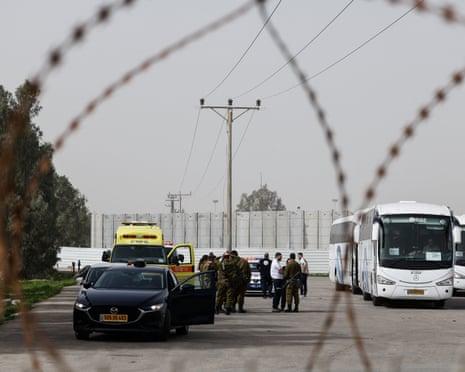
Netanyahu said he has stopped strikes on Iran, claiming they have deterred further attacks
Sundus Abdi
Israeli prime minister Benjamin Netanyahu stated on Monday that he has stopped strikes on Iran, and claims The IDF's strikes has deterred the Islamic republic from launching further attacks, leading to a cessation of hostilities between the two adversaries.
“At this moment, the fire on that front is contained – after we struck the terror regime in Tehran, it stopped attacking us,†Netanyahu said in a televised statement.
However, in the video statement he also said the state would respond “with force†to future attacks.
In a video statement, Netanyahu said the fighting stopped after Israel “hit the terror regime in Tehran.â€
He added: “If Iran makes the mistake and attacks us again, we will respond forcefully.â€
“Israel has a full right to self-defence and we exercise it to the extent necessary,†he said.
In the televised statement, he also acknowledges his conversations with US president Donald Trump, who he has been confirmed to have spoken to since the strikes began on Sunday.