
Global energy watchdog IEA warns oil stockpiles ‘rapidly depleting’
The International Energy Agency has warned oil stockpiles are rapidly depleting, increasing the urgency around reopening the strait of Hormuz.
The IEA explained in a new report that observed stocks had fallen below 7.9 billion barrels for the first time since April 2025:
double quotation mark Although the market is projected to return to surplus towards the end of this year, risks remain substantial and the urgency of reopening the Strait has increased, as previously available inventory buffers are rapidly depleting.
The report, released this morning, was updating the market after benchmark crude prices surged to 2-month highs in July, following the breakdown of the Iran-US ceasefire agreement, which reversed the recovery in oil supplies from the Gulf.
It left oil trading in an “unusually wide rangeâ€, swinging from around $105 to $70 through the month, “driven by sudden diplomatic pivots on the conflictâ€, the IEA said.
The global energy watchdog has now slashed its global supply forecasts:
double quotation mark With an agreement enabling the reopening of Hormuz and unhindered transit through the Bab el-Mandeb Strait still elusive, we have again lowered supply estimates for the rest of the year.Global oil supply is now forecast to fall by 4.3 mb/d in 2026, to 102 mb/d, as growth of 1.4 mb/d from the Americas only partly offsets losses in the Middle East and Russia.
Key events
Steve Ryder, senior fixed income portfolio manager at Aviva Investors says that while the US CPI reading for July remains above the Fed's 2% target, it is still below levels that would spark immediate concerns about price pressures:
double quotation mark The report is likely to reassure policymakers that the sharp downside surprise seen in June was neither entirely noise nor the start of a much faster disinflation process.
double quotation mark Recent Fed communication has emphasised the importance of incoming inflation data, and today's release is unlikely to materially alter the near-term policy outlook.While the data should keep September rate hike expectations alive, it also provides little urgency for the Fed to act immediately. As a result, policymakers are likely to place greater weight on the next CPI release and labour market report before making any decision on whether additional tightening is required later in the year.
Treasury yields and market pricing may see only a limited reaction, with investors continuing to debate whether inflation is converging towards target or stabilising at a pace that remains modestly above it.
US inflation rises 3.4% in July
The US Labor Department says its consumer price index rose 3.4% on an annual basis in July.
That is in line with estimates for a 3.4% rise, according to economists polled by Reuters.
On a monthly basis, CPI rose 0.1%, also in line analyst expectations.
Excluding food and energy prices, which tend to be more volatile, core CPI increased 2.5% annually in July, versus an estimated 2.5% gain.
When excluding food and energy, core CPI rose 0.2% on a monthly basis, versus an expectation of 0.2%.
EasyJet flight attendant staff in France are due to go on strike this weekend amid concerns over working conditions.
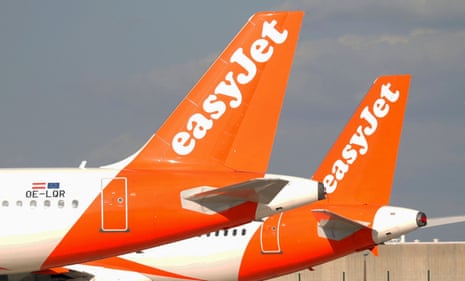
The SNPC-FO trade union issued a statement on Wednesday, saying talks with the company had not yielded any results:
double quotation mark Any flight cancellations or disruptions resulting from these days of action will be solely attributable to easyJet, which has chosen not to give a serious response to the repeated warnings from trade unions over the past months.
EasyJet said the company had made an offer to try address staff's concerns, and asked the strike to be called off. Now, however, the airline's spokesperson said:
double quotation mark We will do all we can to minimise disruption.
EasyJet said it will offer different options to customers hit by disruptions such as free transfers and refunds.
More talks are now scheduled for September.
It comes as the London-listed airline is in the process of being bought by investment fund Apollo in a deal valuing the airline at £5.7bn.
Britain’s grid operator cancels electricity margin notice for eclipse day
Britain's national energy system operator (Neso) has cancelled its electricity margin notice for Wednesday evening, meaning it has secured enough offers from producers to cove the anticipated shortfall.
The question is now how much that electricity coverage will ultimately cost consumers.
Neso had been forecasting a shortfall of nearly 1.2 gigawatts of energy on Wednesday, between 6pm-8pm BST, according to a market notice published early this morning.
That was due to the upcoming solar eclipse, due to hit its peak around 7pm local time, which is expected to knock out the last of Great Britain's solar power generation for the day, at the same time as the country's fifth heatwave of the year is likely to increase demand for electricity to run air conditioning, fans and refrigeration systems.
Opec lowers world oil demand growth forecast for fourth month running
Opec has lowered its full-year forecast for world oil demand growth for the fourth month in a row.
The oil producing cartel said it was now expecting oil demand to have grown to 580,000 barrels per day, according to a copy of the monthly report seen by Reuters.
It marks the fourth straight month that Opec has cut its forecasts.
The group said it continued to see a smaller impact on consumption since the Iran war started, compared to other forecasters such as the International Energy Agency, which expects demand to decline in 2026.
Opec has also raised its forecast for 2027 oil demand growth.

Jasper Jolly
One of the biggest contractors on the HS2 railway has said a renegotiation of its contracts will not result in lower revenues as the government tries to stop its budget ballooning.
Balfour Beatty, a FTSE 250-listed construction company, on Wednesday raised its guidance for future profits as it said benefited from spending on UK energy and transport infrastructure, confirmed defence spending plans, and strong demand for datacentre construction in the US.
The company is in talks to renegotiate parts of the contract to build sections of the HS2 link from London to Birmingham in a joint venture with France's Vinci. HS2 has already renegotiated contracts with two other joint ventures, EKFB and Align.
Philip Hoare, Balfour Beatty's CEO, said the company was “working really closely†with HS2's boss, Mark Wild.
Hoare said:
double quotation mark The reset is not about future revenue. It's about ensuring we're all aligned.We're delivering incredibly well on the project, hitting all the key milestones.
Wild has previously thanked the other contractors for “doing the right thing†in agreeing to bear more of the financial risks if costs overrun.
Balfour Beatty reported total revenues of £5.6bn in the first half of the year, and pre-tax profits of £129m. That was slightly down on the same period last year, although it said profits on an underlying basis had risen 46%.
Hoare, who has served as CEO since September, said he felt “positive about the signals from the UK government†on spending on UK infrastructure, and particularly new prime minister Andy Burnham's statement that “We need to value the hard hats as much as the graduation cap†– “as a business where a lot of people wear hard hatsâ€.
Hoare added that the publication of the UK's defence investment plan, one of Keir Starmer's last major actions as prime minister, has already caused “increased movements of tenders and opportunities as a result.â€
The company is also benefiting from strong demand for datacentres in the US thanks to the artificial intelligence boom, with contracts worth $1bn awarded but not yet formally added to its order book.
On datacentres in the US, Hoare said:
Overall the demand is incredibly strong. The ramp-up and scale-up is very tangible in the US.
The RAC says UK petrol prices have reached their peak since the start of the US war on Iran.
The car services company said a litre of unleaded petrol hit a high of 161.66p at the weekend and has now reduced very slightly to an average of 161.46p.
It has otherwise risen a total of 11p over 33 consecutive days.
Diesel, meanwhile, which has rocketed 17p since 9 July, has also stopped going up for now, having reached 182p (181.92p). Fortunately, this is still almost 10p below its conflict high of 191.54p.
RAC's head of policy Simon Williams said:
double quotation mark The price of petrol appears to have finally reached an Iran war peak, having risen 11p over 33 consecutive days.
double quotation mark While prices should fall a little in the coming days, this may be short-lived as the cost of a barrel of oil has climbed almost $10 in the last week towards $90.The current situation shows just how volatile fuel prices are and how drivers in the UK are at the mercy of global events.
Tycoon Mike Ashley putting final touches on Harvey Nichos rescue deal – Sky News
Billionaire Mike Ashley is reportedly putting the final touches on a rescue deal for struggling retailer Harvey Nichols, which could involve job protection plans.
Sky News is reporting that Ashley's Fraser Group says a takeover via a pre-pack insolvency could be announced tomorrow.
Ashley said to have been in detailed talks with Harvey Nichols' adviser and administrator-in-waiting FTI Consulting, which could involve significant job preservation committments for its 1,200 UK staff.
It could also see Ashley take on all the high-street stores, apart from its Dublin site; offer a year-long guarantee to keep Harvey Nichols' head office; and make outstanding payment to the chain's brand partners.
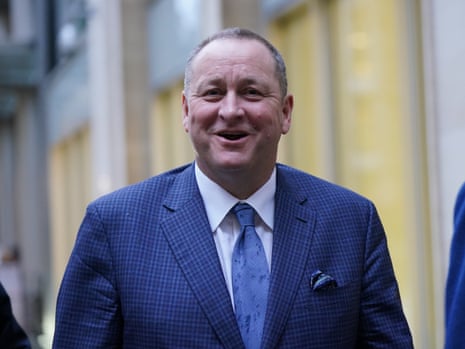
The news comes days after Harvey Nichols warned that it would not be able to survive another year without new investment.
As my colleague Jasper Jolly explained on Monday, Harvey Nichols used to attract a high-profile clientele, including the late Diana, Princess of Wales. Its place in popular culture was cemented inthe 1990s by TV sitcom Absolutely Fabulous, which used the store as a symbol for luxury retail.
However “Harvey Nicks†has struggled to adjust to a boom in competition, including from online retailers, and has failed to make a profit since the Covid pandemic locked out big-spending foreign tourists.
Gold prices near 2-month highs in run-up to US inflation data
Spot gold prices are up 1.1% at around $4,414.63 per ounce, as market watchers eye US inflation data due out this afternoon.
The July inflation data is expected to shed some light on the Federal Reserve's policy path and provide some further clarity over whether they could expect a rate hike next month.
US CPI figures for July are expected at 1:30pm BST.
Saxo UK investor strategist Neil Wilson says:
double quotation mark A hot print will present Fed chair Kevin Warsh with an early test of his mettle – will he follow up those tough words on inflation with action, or continue to lean on jawboning the market and higher bond yields due to oil/inflation dynamics?I continue to think the Fed will have to follow through with at least one hike this year as it remains short on the inflation side of its mandate, and it shouldn't have to worry too much about the employment side, despite those apparently weak payrolls numbers.
Anything up to +0.2% for core and headline suggest inflation trimming back down, which pushes out the odds of a September rate hike in all likelihood and keeps the momentum in the stock market with the bulls after back-to-back days of losses for the S&P 500 in the wake of last week's rally.
Anything above that presses the case for the Fed to move on inflation next month with deeds, not words.
Global energy watchdog IEA warns oil stockpiles ‘rapidly depleting’
The International Energy Agency has warned oil stockpiles are rapidly depleting, increasing the urgency around reopening the strait of Hormuz.
The IEA explained in a new report that observed stocks had fallen below 7.9 billion barrels for the first time since April 2025:
double quotation mark Although the market is projected to return to surplus towards the end of this year, risks remain substantial and the urgency of reopening the Strait has increased, as previously available inventory buffers are rapidly depleting.
The report, released this morning, was updating the market after benchmark crude prices surged to 2-month highs in July, following the breakdown of the Iran-US ceasefire agreement, which reversed the recovery in oil supplies from the Gulf.
It left oil trading in an “unusually wide rangeâ€, swinging from around $105 to $70 through the month, “driven by sudden diplomatic pivots on the conflictâ€, the IEA said.
The global energy watchdog has now slashed its global supply forecasts:
double quotation mark With an agreement enabling the reopening of Hormuz and unhindered transit through the Bab el-Mandeb Strait still elusive, we have again lowered supply estimates for the rest of the year.Global oil supply is now forecast to fall by 4.3 mb/d in 2026, to 102 mb/d, as growth of 1.4 mb/d from the Americas only partly offsets losses in the Middle East and Russia.
Oxford Economics has hiked its oil price forecasts amid renewed hostilities between the US and Iran.
It now expects average oil prices to sit around $85 per barrel over the remainder of this year before gradually falling back to about $65 per barrel by the end of 2027.
That is roughly 0.5 percentage points lower than in February.
Ben May, director of global macro research at Oxford Economics, and author of the report, said:
double quotation mark The renewed hostilities between the US and Iran suggest that a long-term reduction in shipping through the strait of Hormuz is now the most likely scenario.
It isn't in the interests of the US or Iran to keep the Strait of Hormuz permanently closed.
But mutual deep distrust and an unwillingness by either party to make large concessions mean a lasting deal is unlikely to be reached and maintained anytime soon.
As a result, until at least 2028, traffic levels are expected to fluctuate as tensions ebb and flow, while on average remaining well below pre-conflict norms.
Happy eclipse day to all who celebrate*! (* though customers are being asked to turn off their lights and fans to support the grid)

As my colleague Jillian Ambrose reported earlier this week, Great Britain's biggest household energy supplier, Octopus Energy, has been urging customers to use less electricity during what is meant to be the deepest solar eclipse in almost 30 years.
The eclipse, due to hit its peak around 7pm local time, is expected to knock out the last of Great Britain's solar power generation for the day, at the same time as the country's fifth heatwave of the year is likely to increase demand for electricity to run air conditioning, fans and refrigeration systems.
Now, Britain's national energy system operator (Neso) is forecasts a shortfall of nearly 1.2 gigawatts of energy on Wednesday, between 6pm-8pm BST , according to a market notice published early this morning.
The notice is effectively a call for any energy producers to offer any spare capacity to shore up the country's power supplies.
Neso's notices are a rarity for summer months, with these notices usually taking place during winter. However, consecutive heatwaves in recent months have put pressure on UK power supplies, as households turn to fans and air conditioning to keep cool.
Tui shares tumble as Iran war hits profits
Shares in German-listed Tui Group are down 3.1% as the company revealed the ongoing fallout from the Iran war.
Cautious travellers have hit booking levels, while geopolitical tensions kept fuel prices high, weighing on operating profits which fell nearly 27% in Q3 to €234.6m.
Profits at Tui's hotels and resorts division fell 6.2% to €122.7m, while occupancy fell 5% due to 77% following a drop in demand across the eastern Mediterranean, Mexico and the Caribbean.
Meanwhile, its cruises business saw profits tumble 7.2% to €132.4m after taking a €20m hit from the war in Iran.
It comes months after Tui cut its profit forecast and suspended its revenue guidance in March, amid spiralling jet fuel costs and the uncertainty ​surrounding the Iran war.
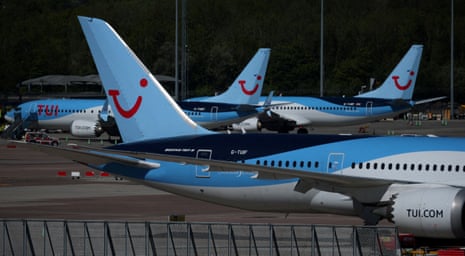
Tui CEO Sebastian Ebel in a statement said that while 2026 “is no ordinary year†Tui had “held its own well in a difficult global environment.â€
double quotation mark Our ‌business â model is proving to be resilient.Travel remains highly relevant to people's lives, but the timing of travel decisions has shifted.
Rivals including Lufthansa, and Air France-KLM, and British Airways owner IAG have also said they were either cutting, or maintaining capacity, in the coming months in order to help offset a broader fallout on their bottom line.
Introduction: Oil prices climb as Iran talks hit impasse
Good morning, and welcome to our rolling coverage of business, the financial markets and the world economy.
Oil prices are still on the rise, as fresh attacks on ships raise concerns about disruptions to Middle Eastern fuel supplies, adding to doubts over the prospects of a US-Iran peace deal.
The US and Yemen's Iran-aligned Houthis have said they endured separate attacks on ships in the strait of Hormuz and the Bab al-Mandeb strait on Tuesday, while Iran's top security official, Mohsen Rezaei, said the strait would stay closed unless the US accepted Iran's conditions to end the war, including the release of its frozen assets and an end to other regional conflicts.
Ipek Ozkardeskaya, a senior analyst at Swissquote says:
double quotation mark Yesterday, the rally in US crude paused for a minute after Pakistan's Defence Minister said that they were getting “close to some sort of arrangementâ€, but the relief remained short-lived after Iran added that the Strait of Hormuz would remain closed until the conditions it demands from the US are met.And the conditions that both parties demand from each other suggest that the problems won't be solved by tomorrow.
That has sustained pressure on Brent crude prices, which are near their highest level in a month and hovering just under $90 per barrel.
And companies like German travel firm Tui are continuing to count the costs.
Europe's largest travel company missed forecasts for its third quarter profits this morning, having been hit by higher jet fuel costs and a drop in bookings.
Tui, which runs cruise ships, airlines and hotels, said operating profit was down nearly 27% to €234.6m, compared to last year. That is also far lower than the €274m projected by analysts.
It reaffirms travel companies' warnings that tourists are thinking twice before going on holiday, given the ongoing uncertainty tied to the Iran war, though bosses maintain that customers are still keen to travel.
More on that shortly. Stay tuned.
The Agenda
-
1.30pm BST: US inflation data for July