
US job report smashes forecasts
Newsflash: Hiring has surged across the US economy.
Employment surged by 162,00 in August, much stronger than the 56,000 new hires expected, the latest non-farm payroll report shows.
The US Bureau of Labor Statistics reports that employment increased in food services and drinking places and in local government education, while the information industry lost jobs.
And in another important development – the US did not shed jobs in July, as first reported.
The BLS reports that there were 44,000 more jobs than it previously estimated in July – meaning employment rose by 21,000, rather than falling by 23,000.
The change in total nonfarm payroll employment for June was revised up by 11,000, from +20,000 to +31,000, too.
This should cheer the Trump White House.
But it might cause some on the Federal Reserve to ponder whether the labor market might be strong enough to handle higher interest rates….
Key events
Closing post
That's all for another week…
The US economy added 162,000 jobs in August, an uptick after a sluggish summer for the labor market.
The unemployment rate held steady at 4.1%, still down from its most recent peak of 4.5% last November, according to new data from the Bureau of Labor Statistics (BLS). Despite the relative stability of the unemployment rate, the number of new jobs added to the economy has been fluctuating, going from 214,000 in March down to a 21,000 gain in July and then back up in August.
Shares in companies seeking oil off the Falklands Islands have fallen, after Argentina threatened sanctions. Rockhopper shares have closed down 6.4% tonight, with Border & Southern shedding 12.6%.
Global food prices have hit a three-year high.
The governor of the Bank of England has said the rise of populist politicians presents a serious challenge to independent central banks.
As Nigel Farage's Reform UK gathered for its annual conference in Birmingham, Andrew Bailey said central bankers must be prepared to explain their decisions to the public or risk being attacked as an “unrepresentative eliteâ€.
The car company Volkswagen has approved controversial plans to shed 100,000 jobs in a battle for survival as it faces fierce competition from Chinese rivals.
And the slump in UK housebuilding has continued…
After a quiet day's trading, the London market has closed broadly where it began the session!
The FTSE 100 share index has closed down 0.4 of a point at 10,831 points.
IT services company Computacenter (+45) led the risers, followed by DIY chain Kingfisher (+3.2%)
UK government bonds have had a calm day too – prices have strengthened a little, pushing down the yields on 10 and 30-year gilts.

Joanna Partridge
A summer of hostilities in the Black Sea has proved deadly for seafarers, as Russia and Ukraine attacked each other's ships and port infrastructure, preventing vital grain exports and prompting concerns that the conflict will push global food prices even higher.
More crew were killed in the Black Sea in July than during the entirety of the war before that month as the conflict has intensified, making the body of water the most dangerous in the world for commercial shipping. This is despite the conflict between the US and Iran, with vessels still being targeted in the strait of Hormuz, Red Sea and Gulf of Aden.
As many as 23 people died in July as a result of attacks on 35 ships in the Black Sea, according to estimates from the Turkish seafarers' union Türkiye Denizciler Sendikası.
Trump: Fed must cut rates
Donald Trump has urged the US Federal Reserve to cut US interest rates, in a Truth Social post bragging about today's strong jobs figures.
The president posted:
double quotation mark Great jobs number just announced, breaking all estimates (except mine!) by double and triple – And you haven't seen anything yet! EMPLOYERS ADDED 162,000 JOB IN AUGUST. Lower the interest rates because the U.S.A. is a much stronger credit than it was just a short time ago!A STRONG COUNTRY MEANS A LOWER INTEREST RATE – IT'S A BETTER CREDIT…Very simple! We should have the LOWEST RATE of any country in the World, like “the old days.†Without the United States agreeing to allow them their big surpluses, and we could stop that immediately, they would no longer be considered financially ELITE! LOWER THE RATE OR I'LL STOP TRADING WITH COUNTRIES WITH WHICH WE HAVE A DEFICIT, which the U.S. Supreme Court, in its ridiculous and very costly Tariff decision, strongly acknowledged “the President†has an absolute right to do. IT'S BETTER THAN TARIFFS!
The Fed Board, with its great new leader, must get smart – BE PATRIOTS for a change. High interest rates put the U.S.A. at a very unfair disadvantage, and I won't allow that to happen! President DONALD J. TRUMP
However, the Fed's ‘great new leader', Kevin Warsh, is more concerned that inflationary pressures are building, which might prompt him to vote for a rate rise not a cut.
Canada's jobs market stumbled in August.
While the US added jobs, Canada shed 41,700 positions in August, data showed on Friday. This included a 19,000 drop in employment among young people, aged 15 to 24.
That follows an unusually strong summer hiring, though.
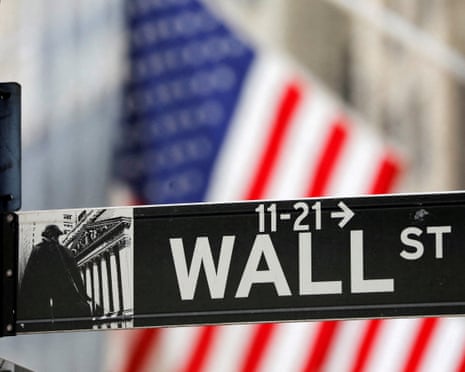
Some stocks have dropped at the start of trading in New York, in the latest sign that good economic news can be bad for markets.
The Dow Jones industrial average responded to the better-than-expected jobs report by dropping 169 points, or 0.3%, to 53,516 points.
The broader S&P 500 index is down almost 0.1%.
Today's August jobs report “shocked everybodyâ€, says Ken Mahoney, CEO of Mahoney Asset Management, explaining:
double quotation mark The economy added 162,000 jobs, and the unemployment rate held at 4.1%. In a normal world, that is good news. Employers hired. The labor market did not roll over.Markets, of course, are not living in a normal world. When it comes to interest rates, bad news has been good news and good news has been a problem. A strong payroll number keeps alive the chance the Federal Reserve tightens again. Futures had already been pricing a higher chance of a September rate hike. A 162,000 print — well above the roughly 56,000 economists expected, and far above the 31,000 average monthly gain over the prior year — does not make that debate go away.
US government bond yields have risen, as the strong jobs report reignites bets on early interest rate rises.
The moves aren't huge, though. The yield, or interest rates on 10-year US treasury bonds is up 3 basis points (0.03 of a percentage point) to 4.792%.
Shorter-dated debt (which is more sensitive to rate expectations) has moved more sharply. Two-year US Treasury yields are up 7 basis points to 4.406%, and Reuters reports they also hit their highest since January 2025.
Here's Richard Carter, head of fixed interest research at Quilter Cheviot, with some rapid reaction to the US jobs report:
double quotation mark “Today's US nonfarm payrolls report was an important test of whether July's surprise decline in employment was the beginning of something more troubling, but with 162,000 jobs added in August, the unemployment rate holding steady at 4.1%, and July's figure revised up to an increase of 21,000, it seems there was no need to worry.“The figures should offer some reassurance to Federal Reserve policymakers ahead of the meeting later this month, as a swift return to job growth supports the view that the labour market has managed to remain broadly stable despite the loss of momentum seen in recent months. Key drivers of this uplift were increases in food services and drinking places, as well as in local government education. Meanwhile, the information industry saw a decline.â€
The dollar is rallying
Today's forecast-smashing US jobs report has given the US dollar a lift.
The dollar index (which tracks the greenback against a basket of other currencies), is up 0.4%, gaining against the pound and the euro.
Where the US economy added, or lost, jobs in August
Here are highlights from today's US labor market report:
-
Employment in food services and drinking places increased by 59,000 in August.
-
Local government education added 42,000 jobs in August
-
Employment in manufacturing continued its upward trend, rising by 16,000
-
Employment in health care continued to trend up, by 13,000
But…
-
Information employment declined by 23,000 in August, following losses that had averaged 8,000 per month over the prior 12 months. In August, job losses occurred in computing infrastructure providers, data processing, web hosting, and related services (-8,000), in publishing industries (-7,000), and in broadcasting and content providers (-5,000).