- Cities across the U.S. are celebrating their ability to manage a surge of visitors and handle increased public transit demands.Â
- For traditionally car-focused Kansas City, the World Cup was an opportunity to demonstrate the value of recent public transit improvements — and how far further investments could go.
- City Manager Mario Vasquez was surprised by the beneficial side effects of having so many visitors downtown. He hopes it could lead the city to push more downtown housing development.
With the dust barely settled from the World Cup, cities are celebrating their successes.
In New Jersey, which hosted the final, public transit officials boast moving 370,000 people to and from the stadium over the state's eight games, averaging just over half an hour to deliver fans from New York's Penn Station. After matches, officials cleared out the stadium within 80 minutes.
“We moved more people, more efficiently than ever before,†NJ TRANSIT president and CEO Kris Kolluri told Governing over email.
In Texas, the Houston Host Committee celebrated shuttling about 500,000 riders by METRORail across its seven game days. The flood of tourists downtown during the tournament drove up pedestrian counts by 48 percent, per a media release.
Competing on the same level as these mega cities initially seemed daunting to Kansas City, the smallest U.S. World Cup host. And officials knew it wasn't starting out with a robust public transportation system.
“We are a notoriously car-dependent city,†says City Manager Mario Vasquez. “We're so spread out from a density standpoint.â€
But in the end, despite initial transit bottlenecks for the first match that left a fan reportedly waiting 90 minutes for the shuttle and some drivers abandoning cars to walk to the stadium, the city corrected course. It delivered a six-game World Cup that Vasquez says not only shows the rest of the world Kansas City's potential but also demonstrates to residents what their city could become, with the right investments.
Putting Transit Back on Track
Several issues compounded for the first match. A Thursday evening start time meant the temporary shuttle to the stadium was collecting people during rush hour. Traffic also backed up near the stadium, because FIFA had only opened two of the venue's seven gates, and only three hours before start time. In all, Vasquez says he'd grade the city a B- for that transit experience.
City officials asked FIFA to open more gates and do so earlier. They also advised people to get to shuttles sooner, rather than expect the quick stadium entrance/exit experience they've had at smaller events. After these changes, Vasquez gives the city's performance all As.
City of Kansas City
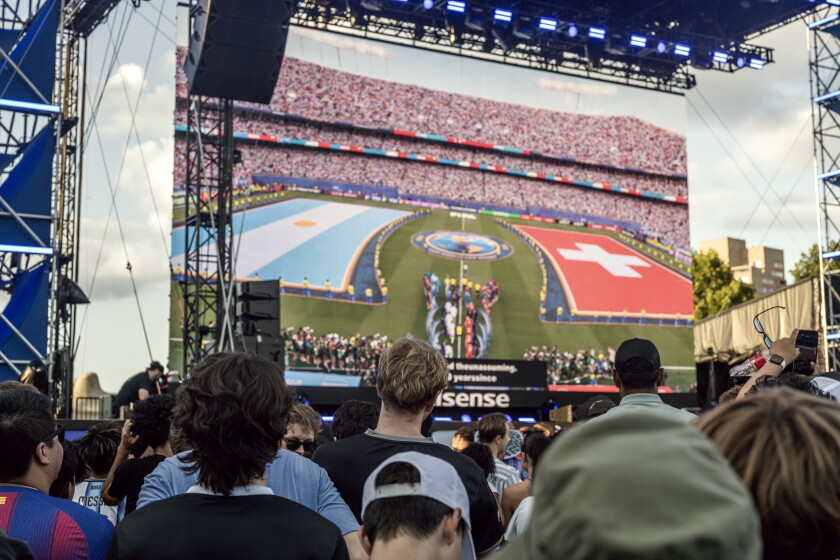
Kansas City also hosted Fan Festivals, official events where fans gathered en masse to watch live broadcasts of games and enjoy other entertainment. Multiyear efforts to extend the route of the city's streetcar — which hit record-breaking ridership — took pressure off the downtown roads, Vasquez says. Despite an estimated 100,000 people visiting downtown during the tournament, Vasquez did not see any major traffic blockages in the area.
Vasquez is hoping those transit experiences left an impression on residents. The city's ability to manage traffic during Fan Fests could ease current debates over whether a new downtown baseball stadium would strain parking and traffic. And he hopes residents and neighboring communities see the potential benefits of extending the streetcar system further and investing in making the regional transit system more frequent.
“I am hoping that, long-term, people can see the benefit of investing in transit as a way of moving around our metro area,†Vasquez says.
Public Safety Surprises
With fans coming together from around the world, some from countries at odds with each other, Vasquez's biggest fear was violence. There was also the risk of celebrations getting dangerous.
Officials prepared for disorder. They pre-approved plenty of staff overtime, monitored areas with drones and established cooperative agreements with surrounding jurisdictions to help with teams' transit details and Fan Fest security. The city set up a special court docket to handle the kinds of municipal violations they expected during the games, like fighting, theft and drunken and disorderly conduct. After Argentina won its first match, police feared huge numbers of fans flocking to the team's home base to celebrate. Officials debated shutting down the local streetcar stop to prevent a potentially disorderly crowd, but ultimately decided people would find other ways to arrive and that it'd be better to keep the stop open so celebrants could later leave easily.
In the end, some fears were overblown. A celebratory, friendly mood prevailed among attendees, and, by Kansas City's fifth match, only 15 individuals had been referred to the special docket. Argentinian fans went elsewhere to party, and Algerian fans brought their traditional flares, but also trash bags to clean up after themselves.

City of Kansas City
In fact, criminal activity, which often slowly rises over the course of the year, plateaued during the World Cup.
Vasquez suspects the density of crowds downtown put extra eyes on the streets that discouraged misbehavior. This offers a lesson for the city, he says — the downtown center, which has about 30,000 residents, could use another 10,000 to 20,000 to achieve the level of density that can deliver greater safety: “It's important for us to populate the core of our city, so that we can continue to experience that sort of lower levels of criminal activity,†he says.
Vasquez hopes the successes of the World Cup will help advance arguments to build more housing. Developers, it seems, are listening: in the days since the World Cup, “I’ve had lots of people calling me and emailing me, telling me, ‘I want to talk to you. I have an idea. I have an idea, I have an idea,’†Vasquez says. For the most part, these are housing proposals. He believes the matches helped bring developers' attention and have given the city a better negotiating position.
All in all, the event has left Kansas City officials feeling eager for more.
“The exposure we had during the event, the good words … that'll last for a while,†Vasquez says. “By the time that wears off, hopefully we'll be hosting the Women's World Cup.â€