Key events
‘A new consumer': how weight-loss drugs are shaking up clothes shopping
I'm now at a point where I'm going to buy even more clothes,†says Hayley Grice, 50, from Shropshire, who has dropped seven sizes after starting on the GLP-1 weight loss jab Mounjaro two years ago. “I'm very happy with my physique right now.â€
Grice, the financial director of a business she set up with her husband, tried gastric bypass surgery in 2009, but put most of the weight back on, and had been between UK dress sizes 26 and 28 (US sizes 22 and 24) all her adult life.
“When you are so morbidly obese, you dress in what you can, what will fit,†she says. “You can't really choose the latest fashion or whatever your style is.†Now a UK size 12, she shops in standard stores rather than from an online plus-size retailer.
“I would have shied away from colour, I would have shied away from anything that drew attention to me,†Grice adds. “And now I don't care, if I like it I'll wear it.â€
The widespread take-up of weight loss drugs such as Novo Nordisk's Wegovy and Eli Lilly's Mounjaro is not only shaking up food habits, but spending across the board – and on wardrobes in particular.
In the US, where one in five adults (21%) have tried GLP-1 drugs, spending on grocery, alcohol and apparel has shifted noticeably.
Britain appears to be on a similar trajectory, where 5% of adults, or nearly 3 million people, are now on the drugs while 9% have taken one at some point, says new research from the consultancy PwC. It expects this number to rise to 13% by the end of next year – about 7 million people.
“A single class of medication is already influencing how millions of people in Britain eat, drink, exercise and shop,†says PwC. “GLP-1s are doing far more than reducing appetite. They are creating a new consumer.â€
Britain's biggest community solar farm forced to shut over grid overload fears
In case you missed this over the weekend… Britain's biggest community solar project has been forced to shut for the duration of its first summer by the government's energy system operator to avoid overloading the local grid with renewable energy.
The north Devon solar farm was ordered to shut weeks before record high temperatures across Europe led to power supply warnings, due to concerns that the large amount of rooftop solar in the area could destabilise the power grid by triggering a “thermal overloadâ€.
The shutdown is expected to cost the cooperative scheme's nearly 10,000 members about £2m in lost revenue before it is allowed to restart again in September.
In a letter to more than 9,500 people and small business owners who own a stake in the Derril Water solar park, the cooperative's board said the “unexpected†shutdown order was “enforced on our solar park and other generators in north Devon with no warningâ€.
First the £10 pint, now the £6.50 flat white: coffee industry faces inflationary pressures
Drinkers across the UK were shocked when a pint in some London bars hit £10, and now a cup of coffee is facing a similar inflationary rate. Some baristas are now charging £6.50 for a flat white.
Higher energy bills, inflated by the war in the Middle East, as well as government policies which have increased tax and wages, are filtering through into coffee prices, experts said.
The price is also being raised by volatile weather in coffee growing regions, with a “super El Niñoâ€, a weather phenomenon which causes extreme rainfall and drought, forecast for the end of the year.
There was heavy rain in Brazil throughout June already, which will dampen harvests and cause prices to rise. In the week ending 28 June, rainfall was nearly 2,000% higher than the historical norm. Waterlogged fields precluded machinery from entering, and the rain severely worsened bean quality, delaying harvests to 52%.

In Vietnam, the largest producer of robusta beans, farmers are fighting early drought, and fertiliser and fuel prices in the country have jumped by 30% year-on-year, and labour costs by 33%.
The Italian coffee company Lavazza warned that the sector faced “exceptional volatilityâ€, with arabica bean prices increasing by 230% since 2021 and robusta up 325% over the same period.
Britons give classic round tomato the red card as coloured and vine varieties score
For a long time the classic round, red tomato has dominated British salads and sandwiches, but its supremacy is coming under threat as sales of rainbow colours and the upmarket rival “cherry on the vine†take off.
“Non-red tomatoes†sales are up 21% this year, a growth rate that far exceeds the overall market, according to Paul Faulkner, of Evesham Vale Growers.
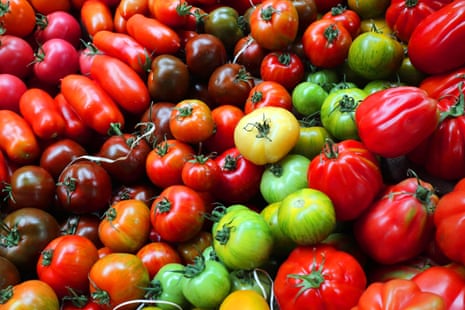
This category covers yellow, orange, green, purple, brown and even striped varieties, which are becoming a more common sight in British supermarkets.
“We've got consumers used to the fact that tomatoes don't have to be red,†said Faulkner. The grower, which supplies Sainsbury's and Aldi, is in lockstep with the trends reshaping the tomato industry, having diverted 20% of its growing area to an orange, cherry, on-the-vine variety.
In the past growers had worked with seed breeders on colourful varieties but, while they had looked the part, they “didn't taste greatâ€, said Faulkner. “Now we've got new varieties that not only look great but taste fantastic.â€
Britons spend just over a £1bn a year on tomatoes, according to the grocery data analyst Worldpanel by Numerator. In the year to 14 June, sales are up 3% on the previous 52 weeks. Within that figure, non-red tomatoes are the fastest growing part of the market.
Jayne-Anne Gadhia named as preferred candidate for FRC chair
Jayne-Anne Gadhia, the former Virgin Money boss, has been named as the government's preferred candidate for chair of the Financial Reporting Council, succeeding Sir Jan du Plessis, who steps down on 30 September.
A chartered accountant by training, she ran Virgin Money from 2007 to 208, where she led the acquisition of Northern Rock and the subsequent listing of the combined business.
More recently she has been a founder and innovator in the fintech sector. She serves as chair of Moneyfarm, Ovo Energy and Shakespeare's Globe, is lead non-executive director at HMRC's executive committee, senior independent director at the Tate, director at PRA Group and Innovo Group and an adviser to SumUp.
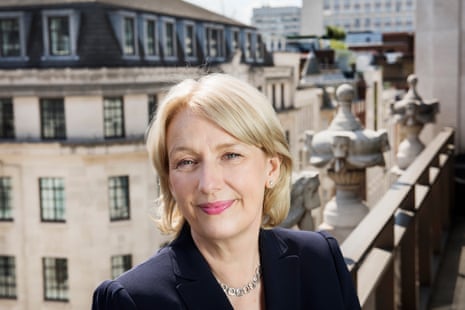
She is also a longstanding champion of diversity in financial services, having served as the UK government's women in finance champion for five years.
Her appointment comes at a significant moment for the FRC as the organisation has undergone substantial transformation under outgoing chair, to improve audit quality, strengthen corporate governance and reporting standards, reform its supervision and enforcement processes and establish itself as a more focused and transparent regulator.
The business secretary, Peter Kyle, said:
double quotation mark Dame Jayne-Anne Gadhia has a proven track record in driving growth and championing high standards in the organisations she leads, along with exceptional experience in financial services.
Struggling pub landlords given a lifeline by England's World Cup heroes
The beleaguered pub sector is getting a boost from England's World Cup run, with some landlords reporting roaring sales as anticipation builds for a bumper night on Wednesday for the semi-final clash with Argentina.
Lisa Mayall, the manager of the British Oak in Kingswinford near Dudley in the West Midlands, was jubilant after England's 2-1 win against Norway on Saturday night and brisk takings at the pub's till. She expects hundreds more customers for the team's next game at 8pm BST.
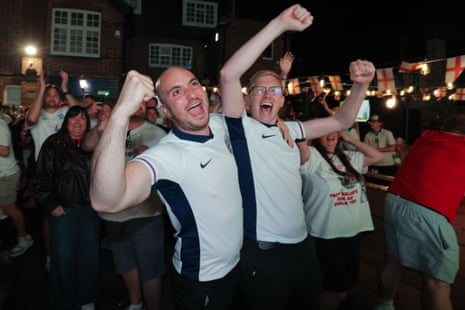
“I think our sales will treble on Wednesday night especially as we've got Argentina – there's so much rivalry and it could be payback for the Hand of God,†she said referring to Maradona's infamous handball goal against England in the 1986 World Cup.
European shares have turned positive, pushing cautiously higher. This in sharp contrast to the sell-off in Asia, where South Korea's Kospi plunged 9.85%.
Germany's Dax rose 0.15% and Italy's FTSE MiB climbed 0.3% while France's CAC and Spain's Ibex were just about in positive territory.
In London, the FTSE 100 index is trading 14 points higher, a 0.1% rise, with housebuilders and oil companies leading the gains. There are reports that prime minister-in-waiting Andy Burnham could bring back the help to buy programme, which has underpinned housebuilder sales in the past, while BP and Shell will benefit from the jump in oil prices.
“Global stocks may be falling off the back of renewed tensions between the US and Iran, but the FTSE 100 is an exception thanks to its chunky energy sector exposure,†said Dan Coatsworth, head of markets at AJ Bell.
double quotation mark Index heavyweights BP and Shell are beneficiaries of a concerted move higher in oil prices. This upwards shift in crude reflects concern about the fate of the fragile truce between Washington and Tehran after renewed strikes over the weekend.Add in housebuilders mounting a recovery from the lows reached after last week's big profit warning from Vistry, and the UK's flagship index looks decidedly healthy when compared with the sickly performance elsewhere.
Miners, airlines and tech investment vehicles including Polar Capital Global Technology and Scottish Mortgage were among the main losers in London.
After a blockbuster debut in the US last Friday, South Korea's SK Hynix came back down to earth with a jolt as investors took profits in its Asia-traded shares. While that suggests certain investors believe the memory chip rally might have peaked, there are other signs to suggest the AI trade is still strong. TSMC's second-quarter revenue beat expectations as it surged 36% to a new record high, though investors were largely keeping their powder dry as they await full quarterly figures on 16 July.
Oxford Nanopore shares plummet after revenue miss
Oxford Nanopore Technologies shares plummeted after the biotech company admitted that revenues would fall short of its own expectations, hit by a triple whammy of weaker sales in China, disruption in the Middle East and the timing of customer orders in the Americas.
The FTSE 250-listed shares fell more than 20% earlier and are now down 11.5%.
Trading in the first half was below management expectations, the Didcot-based company said. It produces gene sequencing technology, devices used to identify viruses and spot variants in the genetic makeup of humans, animals and plants.
Revenue in the first half is expected to come in at £116.5m, up 12% year-on-year at constant currencies.
In China, revenues fell 16%, reflecting tougher export control restrictions and changes to commercial operations, and the conflict in the Middle East, where revenue declined 14%.
Sales grew 12% in the Americas, although growth was slower than anticipated due to the timing of customer orders and contract wins.
Francis Van Parys, the chief executive, said:
double quotation mark While first half revenue growth was below our expectations, we have continued to make good operational progress in the period, delivering further improvements in gross margin and disciplined cost control, keeping us on track to achieve adjusted EBITDA (earnings before interest, tax, depreciation and amortisation) breakeven during 2027.We continue to see encouraging momentum across our strategic growth markets, particularly clinical and biopharma.
Oxford Nanopore, which was spun out of Oxford university in 2005 by three scientists who met at the university, still expects “a materially stronger second halfâ€.
AkzoNobel shares rise after Dulux maker gets Nippon Paint proposals for decorative paints business
AkzoNobel shares rose after the Dulux maker said it had received several proposals from Nippon Paint to buy its decorative paints business, valuing ​it at €7.5bn.
Shares in the Dutch company that bought ICI in 2007 and has owned paint-maker Dulux ever since, rose 2.1%, giving it a market value of €10bn.
The news comes a month ‌after Nippon Paint withdrew an offer to buy the whole company along with US-based Sherwin-Williams for €12.5bn.
AkzoNobel, which makes the Dulux brand of paints, rejected the takeover offer from Nippon Paint and Sherwin-Williams ​in May, as it pushes ahead with its plan to merge with ​the US coatings maker Axalta.
“Every color tells a story†– that was AkzoNobel's slogan when it launched its new paint collection with The Walt Disney Company a month ago. The new collection features colours with characters from Marvel, Frozen and Star Wars.
European travel shares decline
Meanwhile, European airline stocks are falling, not surprising given the sharp increase in oil prices as the US and Iran trade attacks and engage in a war of words over whether the strait of Hormuz is open.
The pan-European Stoxx 600 fell 0.2%, after recording its biggest weekly loss since late April on Friday. The travel and leisure sub-index tumbled 1.2% as Ryanair (down 0.9%), Air France (down 2.4%) and International Consolidated Airlines (down nearly 2%), which owns British Airways, Iberia, Vueling, Aer Lingus and other carriers, all fell.
Wizz Air dropped just over 2%, Lufthansa lost 2.6% and Finnair was down almost 2%.
AstraZeneca shares fell 1.2% after a broker downgrade. HSBC downgraded the stock to “hold†from “buy†and cut its target price for the shares to £13.750. Berenberg also lowered its target price. The company said last week that its drug Wainua had failed in a late-stage trial for heart disease.
Here is our markets wrap:
Government bond yields head higher, FTSE slightly higher
Government bond yields are heading higher, with the UK's 10-year gilt yield getting closer to 5%.
It rose 4 basis points to 4.91%, effectively raising the cost of borrowing for the UK government – a week before Andy Burnham is expected to become the new prime minister.
He is considering an expanded budget this autumn that would combine the annual fiscal statement with a departmental spending review and set out his political strategy and priorities until the next general election, the Financial Times reported.
The biggest item in his in-tray will be his spending priorities until the next election and how to fund them.
This bumper budget might come in October. Nick Bubb, an independent analyst said
double quotation mark Good luck with that timing, given all the wrangling over spending cuts and tax rises that lies ahead, and with things kicking off again in the Middle East…
In stock markets, the FTSE 100 index has pared its early gains and is trading less than 8 points higher at 10,505, up 0.08%. The Italian borsa is also slightly up while the rest of Europe is a sea of red, with the German and French indices slipping 0.1%.
The FTSE's home builders sub-index rose 2.5%, after reports that Burnham could revive the help to buy scheme for homebuyers. Persimmon is leading gains on the FTSE 100 index, up 3.3%, while Barratt Redrow gained 2.5% and Vistry Group on the FTSE 250 was nearly 4% higher.
Burnham has also promised the biggest council house building programme since the end of the second world war.
Oil companies BP and Shell were also among the biggest FTSE 100 risers, as beneficiaries of the oil price surge.
Introduction: Oil price jumps over 4% and gold slides as the US and Iran trade attacks
Good morning, and welcome to our rolling coverage of business, the financial markets and the world economy.
It's a gloomy start to the week as attacks between the US and Iran in the Gulf continue. Tehran said it had closed the strait of Hormuz, while Donald Trump insisted the key shipping passage remained open and US officials said 20 ships were escorted through the waterway in the past 24 hours.
As the US military launched a new wave of attacks against Iran amid the escalating standoff over the strait, and Iran launched missile and drone attack on US bases in neighboring countries, Tehran said the latest strikes had “rendered futile†all the diplomatic efforts of the past few months. Trump stated last Wednesday that the ceasefire was over. Qatari and Pakistani mediators are trying to salvage the deal and bring the two parties back to the negotiating table.
Brent and US crude oil prices have jumped, while gold slid, Asian shares tumbled and share futures point to a lower open in Europe and on Wall Street later.
Brent crude rose 4.2% to $79.18 a barrel in early London trading. Spot gold fell 1.5% to $4,060 an ounce.
Jefferies analyst Mohit Kumar said:
double quotation mark For now, we remain hopeful that both parties would return to the negotiating table and traffic would start to flow through the strait. We are not looking for oil prices to go back to the March highs.
Japan's Nikkei lost 2.1% while Hong Kong's Hang Seng slipped 0.1%. China's CSI 300 slid 1.78% and South Korea's Kospi plummeted nearly 10%. A month and a half ago, it was hitting record highs thanks to the AI boom.
Shares in the South Korean chipmaker SK Hynix plunged more than 15% in Seoul, apparently because of profit taking after its successful debut on Nasdaq last week. However, investors have become more sceptical about the AI boom in recent weeks.
The earnings season is upon us, with banks reporting their quarterly results from Tuesday, and Netflix on Thursday.
Expectations of an interest rate hike from the US Federal Reserve have increased slightly, a day before chair Kevin Warsh faces Congress for the first time in his new role.
Kumar added:
double quotation mark This week would be an important week to determine which direction geopolitics takes. Focus would also be on US CPI [consumer prices index], particularly with oil prices threatening further inflationary pressure in the pipeline. It's also likely to an important week for central bank speech with Warsh testimony in front of the House (Tuesday) and Senate (Wednesday). Market is still not sure whether Warsh sits on the hawkish or the dovish camp. Our view is that he sits in the credibility camp and hence would respond to the incoming data.
The pound slipped 0.2% to $1.3377 against the dollar in a crucial week in UK politics, as Andy Burnham, the former Greater Manchester mayor and now Makerfield MP, is expected to become elected as Labour leader on Friday, and named prime minister next Monday.
The Agenda
-
5.45pm BST: European Central Bank executive board member Isabel Schnabel speech
-
7pm BST: Bank of England chief economist Huw Pill speech