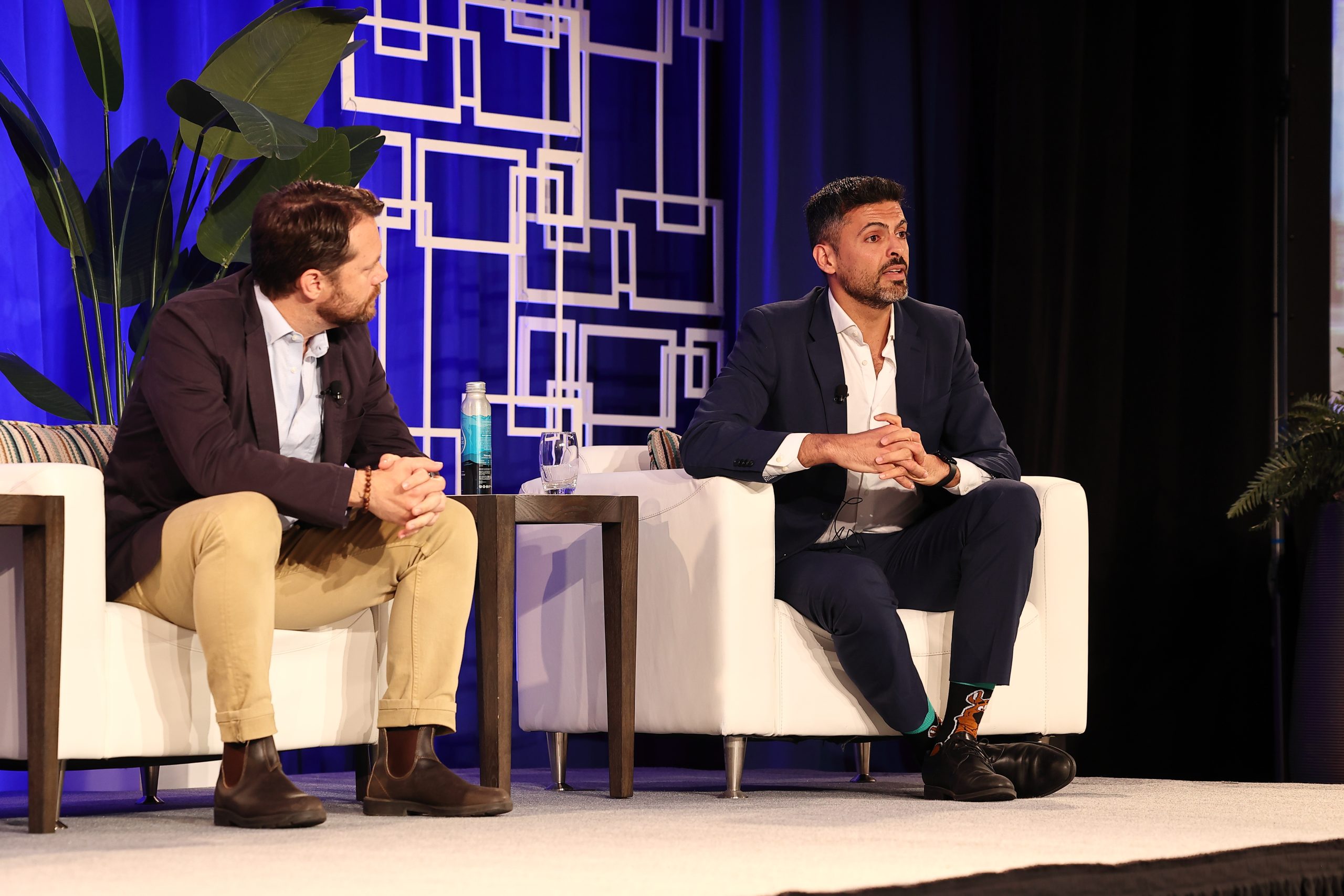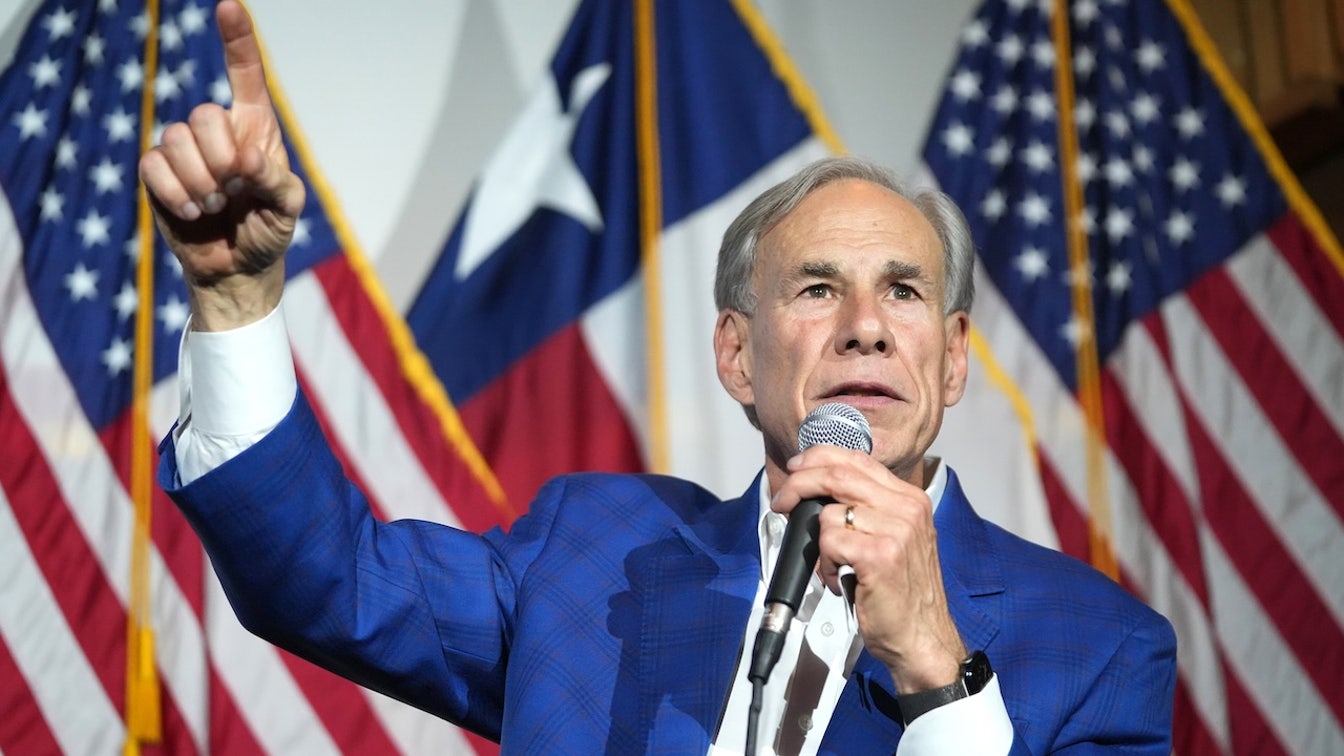
Roughly 50 leaders from across every branch of the U.S. military gathered at Arizona State University in Tempe this week to answer the following question: How do we prepare America's future military to learn, adapt and lead at the speed of change?
The two-day Commander's Military Innovation and Learning Summit, co-hosted by the ASU Foundation and the Office of the Chief Operating Officer, underscored ASU's growing role as a strategic learning and innovation partner for the military.Â
Senior leaders from across the services joined university experts to examine how new approaches to education and technology can better prepare for what comes next.
The conversations ranged from generative AI and personalized learning to immersive technology and lifelong professional development. But a larger theme was readiness and applying ASU's expertise, scale and culture of innovation to help service members build the skills they need throughout their careers.
For ASU President Michael M. Crow, that means building an educational model capable of responding when military leaders identify a need, regardless of how large, specialized or urgent it might be.
“We think the country needs national universities, national service universities, institutions capable of rising to the occasion,†Crow said during the welcome reception for the summit. “So literally, if you all said to us is, ‘I need 10,000 cyber-equipped individuals that can do this, this and this within nine months' — no problem. We can figure out how to do that.â€
That ability to move at scale was at the heart of the summit, which brought together senior leaders from the Army, Air Force, Navy, Space Force, Coast Guard, Marine Corps and National Defense University. The agenda centered not on what universities can teach military personnel, but on how higher education and the military can jointly design new learning systems around the rapidly changing needs. Â
A partner for problems that can't wait
Chris Howard, ASU executive vice president and chief operating officer, and an Air Force Academy graduate, put ASU's ambition in unmistakable terms.
“We will be the preferred strategic learning and innovation partner to the U.S. military. Full stop,†Howard said. But he stressed that partnership extends beyond ASU itself, bringing together other universities, community colleges, industry and innovators to create a larger ecosystem capable of responding to military needs.
That model resonated with Lt. Gen. Edmond “Miles†Brown, acting commanding general of U.S. Army Transformation and Training Command, who said the scale of the Army's current transformation requires a different relationship with academia.
“If you've got a really tough problem, you have to have a world-class government partner, you have to have a world-class industry partner, and you've got to have a world-class academic partner,†Brown said. “Otherwise, you won't really solve the problem.â€
Lt. Gen. Clark Quinn, commander of Air Education and Training Command, made a similar point from a different perspective. The Air Force, he said, exists to address strategic and operational challenges, not to reproduce every capability of a university internally.
“There's partners like this university that do that for a living,†Quinn said, pointing to the value of outside expertise in everything from digital access to the systems supporting military learners. “We do (it), but we don't have the expertise for it.â€
That distinction is becoming more important as the body of knowledge required by service members expands beyond what military schoolhouses can reasonably contain.
Learning at the speed of change
For some leaders at the summit, the urgency is driven by operating domains changing faster than traditional curricula. Brig. Gen. Jason Schramm, deputy commander of Space Training and Readiness Command, said Space Force Guardians must prepare for circumstances for which there is no historical playbook.
“There's never been a war in space,†Schramm said. “We need to prepare our guardians today to win that very first war.â€
Doing that, he said, requires continuous, modular and competency-based learning that can be delivered when it is needed, not simply when the next scheduled course arrives. And with a service of roughly 10,000 people, partnerships are essential.
“We don't have a ton of resources. We have a lot of ideas,†Schramm said. “But we need a lot of help, partnerships with the university.â€
Vice Adm. Peter Garvin, president of National Defense University, similarly described the summit as a chance to learn from organizations already experimenting with new models.
“We're here to learn from you,†Garvin said. “I think there's some real opportunity here to sort of up all of our game.â€
Maj. Gen. Trevor Bredenkamp, president and commanding general of Army University, pointed to another advantage ASU can bring: the infrastructure needed to understand whether learning is actually working.
“One of the benefits of working with you all is you have the data backbone and the data analytics,†Bredenkamp said, allowing educators to ask what the user experience is showing them and whether programs are producing the outcomes they were designed to achieve.
Building the next generation of military learners
Artificial intelligence emerged repeatedly as one way to accelerate that transformation.
Wendy Walsh, chief learning officer for Air Education and Training Command, said the services are already developing courses, certificates, hackathons and faculty-development efforts around AI. What is missing is a clearer way to connect those efforts and share what works.
“We need that space for sharing what's out there,†Walsh said. “Our airmen, our warfighters, are hungry to be ready and to lean in. It's just the pathway is a little murky.â€
Crow sees technologies such as AI and immersive learning not as ends themselves, but as tools for building a fundamentally more adaptive educational system capable of reaching service members wherever they are, and tailoring learning to what they need next.
That vision was reflected in a set of ideas discussed throughout the summit: Every service member should become a master learner and a master innovator; learning should be available at the moment of need; and education, training and credentials should follow people throughout their careers.
For Howard, the opportunity comes down to combining two institutions that understand the stakes of preparing people for an uncertain future.
“Train for what you know, educate for what you don't know,†he said. “We do education and training, which is why I think we're really good soulmates with the respective services.â€
Advancing US defense, innovation and leadership
Arizona State University is committed to a unified, institution-wide effort to strengthen American defense and resilience. Our work in national defense builds on a long history of collaboration with the U.S. military, the growth of a strong community of veterans and military-connected learners, and sustained engagement with public leaders responsible for national decisions.
Learn more at defense.asu.edu.